- Change theme

Electronic Shelf Labels and Retail Media: Opportunities, Controls, and Measurement
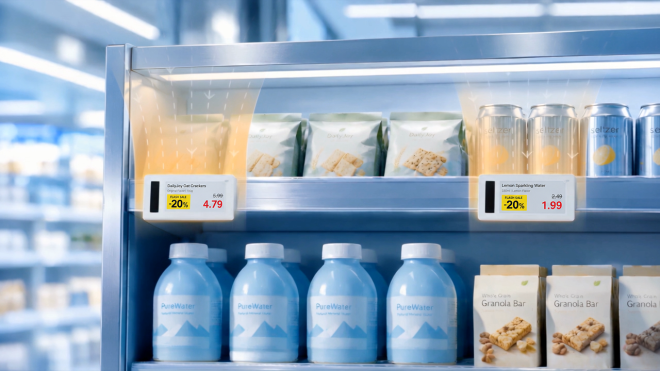
For retailers considering the shelf edge as a retail media surface, a measured approach works best.
22:35 15 October 2026
Retail media is moving closer to the moment of decision. What started with sponsored listings on e-commerce sites has expanded into store environments — endcap screens, checkout displays, and now the shelf edge itself. As brands look for touchpoints that influence shoppers right where they reach for a product, the electronic shelf label has entered the retail media conversation.
But the shelf edge is not a billboard. Its first job — and the one shoppers depend on — is to deliver clear, accurate pricing and product information. Any retail media strategy that treats a digital price tag as just another ad surface risks undermining trust. The opportunity is real, but so is the need for careful governance.
This post walks through the content hierarchy, technology boundaries, publishing controls, governance principles, and measurement frameworks that retailers and brands should consider before turning the shelf edge into a media channel.
What Belongs on the Shelf Edge — and in What Order
Not all shelf-edge content serves the same purpose. Establishing a clear priority helps teams avoid conflicts and keeps the shopper experience coherent.
Price and compliance information.
This is non-negotiable. The current selling price, unit price, and any regulatory labels must be legible at all times. Nothing else on the display should compete with this layer.
Retailer-driven promotions.
Loyalty pricing, multi-buy offers, and clearance flags fall here. These are owned by the retailer's pricing or merchandising team and follow established promotional calendars.
Brand-funded content.
This is where retail media enters the picture — a brief brand message, a "new item" flag, a recipe suggestion, or a nutritional highlight. The content is paid for or co-funded by a brand, but it must be approved by the retailer and must not obscure price information.
Navigational and informational cues.
Shelf-edge displays can also carry category labels, allergen icons, or sustainability badges that help shoppers orient themselves. These are typically retailer-controlled and serve a wayfinding function.
Keeping these layers distinct — and ranked — prevents the shelf edge from becoming cluttered and ensures that compliance requirements are always met first.
Electronic Shelf Labels vs. LCD Displays in Retail Media
It helps to compare the three most common shelf-edge and in-store display types, because each has different strengths and constraints.
Electronic shelf labels (ESLs) commonly use e-paper technology. Color capabilities vary by model, and e-paper is optimized for low-power display of prices, promotion flags, and concise product information. It is best suited to static or selectively refreshed content; motion, video, and richer creative are better matched to powered LCD shelf-edge displays.
LCD shelf-edge screens are strip-shaped displays mounted along the shelf rail. They offer full color, motion graphics, and video playback. However, they require a wired power supply and generate more heat. Their strength is eye-catching dynamic content; their limitation is higher cost per linear meter and ongoing energy consumption.
Other in-store screens, such as endcap monitors, aisle-end displays, and checkout screens, are larger and positioned away from individual products. They suit category-level storytelling and broad brand awareness but lack the direct product-level proximity of shelf-edge hardware.
For retail media, the key takeaway is that an electronic shelf label is best suited to concise, high-relevance communication tied to a specific SKU, while LCD shelf-edge screens and larger in-store displays are better suited to richer, dynamic storytelling. A well-designed in-store retail media program may use several formats, but each should be assigned a role that matches its technical capabilities and the shopper context.
Publishing Controls: From Template to Shelf
Shelf-edge content should never go live without a controlled workflow. A robust publishing process includes several stages:
Templates. Pre-designed layouts ensure that price fields remain in a fixed, prominent position while allocating a defined zone for promotional or brand content. Templates enforce visual consistency and prevent ad-hoc designs from violating readability standards.
Approval gates. Every piece of brand content passes through a review process — typically involving category management, legal or compliance, and store operations — before it enters the content library.
Scheduling and calendar management. Content is tied to specific date ranges, aligned with promotional periods, and automatically replaced or removed when campaigns expire.
Store scope. Not every campaign runs in every store. Content should be assignable by region, format, cluster, or individual location.
Version control. An audit trail records what content was displayed, where, and when — essential for billing accuracy, compliance reviews, and post-campaign analysis.
These controls help protect the retailer's brand, support compliance, and give brand partners greater confidence that their content runs as planned.
Governance Principles for the Shelf Edge
Beyond process controls, retailers benefit from establishing explicit governance principles:
Price readability first. No promotional overlay should reduce the legibility of the price. Minimum font sizes, contrast ratios, and reserved zones should be defined in design guidelines.
Information transparency. Shoppers should be able to distinguish retailer promotions from brand-funded content. Subtle labeling — such as a small "sponsored" tag — maintains trust without heavy-handed disclaimers.
Frequency and freshness control. Retail media content should follow campaign needs, shelf communication rules, and the retailer's publishing calendar. Schedule, replace, or retire messages through controlled content management rather than assuming that every campaign needs continuous refreshes.
Customer experience over monetization. If shopper feedback or store-level data suggests that shelf-edge media is creating confusion or visual overload, the program should scale back. Revenue from retail media must not come at the cost of the in-store experience.
Measuring Campaign Performance and Being Honest About Attribution
A practical retail media measurement framework should separate delivery and exposure signals from advertiser outcomes. Retailers and brands should agree the metric definitions, data sources, attribution window, and control design before a shelf-edge campaign goes live.[2][3]
Opportunity to see. Estimate opportunities to see using independent media-delivery logs, display location, campaign duration, dwell or attention proxies, and deduplicated audiences where available. Treat this as an opportunity-to-see measure rather than a confirmed impression count: store foot traffic alone does not establish exposure.
Update success rate. The percentage of devices that successfully received and displayed the intended content within the scheduled window. This is an operational KPI that underpins campaign reliability.
Interaction signals and conversion. NFC taps, QR scans, product-page visits, basket attachment, or purchase conversion can indicate engagement when the event is tied to the campaign, eligible product, and store scope. These signals should be reported separately from sales impact because an interaction is not automatically an incremental sale.
Promotion execution compliance. Did the right content appear on the right shelf, in the right store, at the right time? Independent media-delivery logs and spot-check photography can validate execution quality; transaction and sales data should be analyzed separately as outcome data.
Sales impact and incremental sales. Compare promoted SKU sales, basket attachment, or conversion for eligible stores or shoppers with a pre-campaign baseline and a matched control group. Define which independent media-delivery records establish eligible exposure, which transaction and sales data define outcomes, the attribution window, and exclusions for concurrent promotions, price changes, stock-outs, and seasonality before the campaign starts.
For advertisers, ROAS is attributed sales value divided by ad spend, while iROAS is incremental revenue divided by ad spend. Keep the denominator consistent as ad spend or media spend across campaigns and declare the agreed sales or revenue basis. Use independent media-delivery logs for exposure evidence and transaction or sales data for outcomes; POS transactions do not establish ad exposure or incrementality without a comparison. Report the attribution window and control design next to each figure.
Where to Start
For retailers considering the shelf edge as a retail media surface, a measured approach works best. Start with a limited number of categories where brand partners have expressed interest and a manageable set of pilot stores. Define content hierarchy, governance rules, independent media-delivery data, transaction and sales data, attribution windows, control groups, and reporting responsibilities before the first campaign goes live.
Hanshow's shelf-edge portfolio includes e-paper ESLs for accurate product and pricing communication and Lumina Edge LCD displays for richer dynamic content such as images and video.[1] Whatever display format is used, retail media governance should keep price and product information clear, while commercial measurement remains dependent on independent media-delivery evidence, transaction or sales data, a defined attribution window, and an appropriate control design.
References
[1] Hanshow. Lumina Edge. https://www.hanshow.com/en/lumina-edge. Accessed 21 September 2026.
[2] IAB Europe. Guidelines for Incremental Measurement in Commerce Media. https://iabeurope.eu/knowledge_hub/guidelines-for-incremental-measurement-in-commerce-media/. Accessed 21 September 2026.
[3] IAB Europe. Commerce (Incl. Retail) Media Measurement Standards V2.1. https://iabeurope.eu/knowledge_hub/iab-europes-commerce-incl-retail-media-measurement-standards-v2/. Accessed 24 September 2026.