- Change theme

Engine Airflow and Its Role in Performance Tuning
Your engine needs a controlled supply of oxygen to support combustion
23:53 01 October 2026
Engine performance depends heavily on how efficiently air moves into the cylinders, mixes with fuel and exits through the exhaust system. When you tune an engine for greater power or sharper response, airflow becomes one of the main factors determining whether those modifications deliver worthwhile gains. Understanding how intake restrictions, filtration, fuel delivery and exhaust flow interact helps you make performance changes that work together rather than simply adding parts without a clear purpose.
Airflow Determines How Efficiently Fuel Burns
Your engine needs a controlled supply of oxygen to support combustion. As engine speed and load increase, the cylinders require more air to maintain the appropriate mixture of air and fuel. Restrictions within the intake system can reduce the amount of air reaching the engine, limiting its ability to produce additional power even when other components have been upgraded.
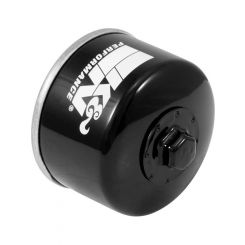
Filtration is one part of that balance because the filter must capture contaminants while still allowing sufficient air to pass through the intake. Depending on your vehicle and tuning goals, options may include K&N filters for performance-focused engine filtration alongside other filter designs suited to different driving conditions. The most appropriate choice should complement the intake setup as a whole rather than being treated as a standalone route to additional power.
Intake Design Affects Air Volume and Temperature
Your intake system influences both the quantity and temperature of the air entering the engine. Smooth pipework, appropriate intake diameters and well-designed airboxes can reduce unwanted turbulence and pressure losses before air reaches the throttle body.
Temperature matters because cooler air is denser and contains more oxygen within a given volume. An intake that draws excessive heat from the engine bay may therefore reduce some of the theoretical benefit of improved airflow. Effective performance tuning considers intake routing and heat management alongside outright flow capacity.
Throttle and Manifold Flow Shape Engine Response
Once air passes through the intake, it must travel through the throttle body and intake manifold before entering the cylinders. These components influence how evenly air is distributed and how quickly the engine responds when you increase throttle input.
Larger components do not automatically deliver better results. Oversized throttle bodies or intake passages can change air velocity in ways that reduce low-speed response. Matching component dimensions to engine displacement, operating speed and intended use generally produces a more balanced outcome than maximising airflow capacity without considering how the engine will actually be driven.
Fuel Delivery Must Match Increased Airflow
Adding more air without adjusting fuel delivery can move the air fuel ratio outside the range required for efficient combustion. Modern engines use sensors and the engine control unit, or ECU, to manage fuelling, but significant airflow modifications may require recalibration.
Proper tuning allows the ECU to account for changes in intake flow, injector requirements and ignition timing. Without suitable calibration, an engine may run poorly, produce inconsistent power or experience higher operating temperatures. Airflow improvements therefore deliver their best results when they are supported by accurate fuel and ignition control.
Exhaust Flow Completes the Airflow Cycle
Performance tuning does not stop once air enters the engine. Burnt gases also need to leave the cylinders efficiently through the exhaust manifold, catalytic converter and exhaust system.
Excessive exhaust restriction can increase back pressure, making it harder for the engine to clear gases before the next combustion cycle. However, simply fitting the largest possible exhaust is not necessarily effective. Pipe diameter, exhaust velocity and engine characteristics all influence how well the system performs, so intake and exhaust modifications should be considered together.
Tuning Must Treat Airflow as a Complete System
Your engine responds to airflow changes as part of an interconnected system rather than as separate modifications. Filtration, intake design, throttle flow, fuel delivery, ECU calibration and exhaust efficiency all influence how effectively the engine breathes.
When these elements are matched properly, improved airflow can support stronger throttle response, more consistent combustion and greater performance potential. Approaching tuning as a complete airflow strategy helps you make modifications that complement one another while maintaining the reliability and drivability you need.