- Change theme

How Product Design Decisions Affect CNC Machining and Manufacturing
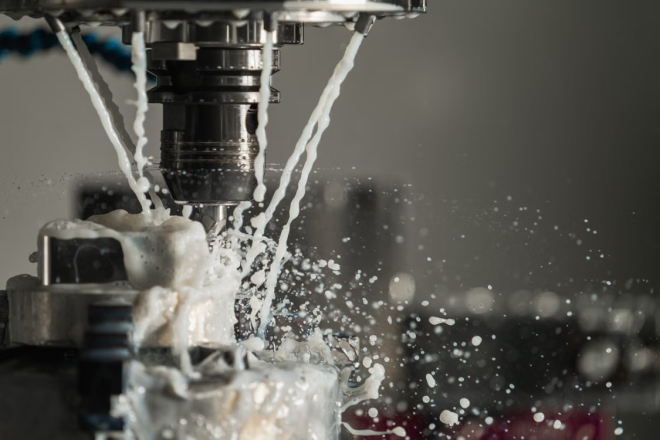
A manufacturable design balances what a part must do with what a shop can deliver.
10:26 24 October 2026
Every engineer knows the feeling. The CAD model looks perfect — clean geometry, exact dimensions, not a flaw on screen. Then the first part comes back from the shop floor, and reality has opinions. A corner the tool could not reach. A wall too thin to survive machining. A tolerance callout that quietly doubled the price.
That moment has a cause, and it is rarely the machinist. Parts fail in manufacturing because of decisions made months earlier, at a design desk. Design for manufacturing — DFM — is the discipline of making those decisions on purpose: shaping a part so a real shop can produce it accurately, repeatedly, and at a cost the project can carry. Not a design that works on screen. A part your team can manufacture, inspect, assemble, and trust in the field.
DFM in 20 seconds:
- Most of a part's cost and difficulty are locked in at the design stage — long before anyone cuts material
- Choose the process from the design, never from fashion or habit
- Spend tight tolerances only where function demands them
- Put every requirement in writing before production starts
DFM at a Glance: The 7 Decisions That Shape Every Part
Material and Geometry: Where Manufacturability Is Won or Lost
Start With the Application, Not the Datasheet
Material drives weight, strength, durability, corrosion resistance, thermal behavior, and how a part machines. Pick it because it is strong, or because it is cheap, and the part will punish the choice in its working environment — not in the spreadsheet. Start from the application instead:
- Aluminum — when low weight and machinability matter most
- Stainless steel — when corrosion resistance tops the list
- Engineering plastics — when a component needs specific electrical, chemical, or weight characteristics
The grade matters as much as the family. Weigh the operating loads, temperatures, environmental exposure, expected service life, and any industry standards before locking a material in then run the two checks teams skip. Is the grade actually available in reliable supply? And how does it work? A difficult material demands complex processing, while an alternative often performs just as well at half the effort.
Look Beyond the Shape: Assembly, Mating Surfaces, and Operating Conditions
A narrow internal corner can force special tooling. An unusually thin wall can add machining operations and weaken consistency from part to part. A feature the tool struggles to reach stretches production time and complicates inspection. A proper design review walks the geometry feature by feature and then looks past the shape entirely, at the assembly interfaces, fastening points, mating surfaces, and operating conditions the part will live with. A part can measure perfectly and still be wrong in every way that matters.
Tolerances and Finish: Spend Precision Only Where It Pays
Tolerances define how much a dimension may vary and still pass. They earn their keep wherever components must fit together, align, or perform a precise mechanical function. But tolerance is a budget, and undisciplined teams overspend it: extremely tight callouts on every dimension buy extra machining and inspection time without buying performance. The discipline is short:
- Identify the critical dimensions — the few that function truly depends on — and hold those tight
- Allow appropriate variation everywhere else, and spend the savings where they matter
Surface finish follows the same logic. A mating surface, a visible exterior, and a hidden internal component live three different lives: some applications need smoothness for movement, sealing, or appearance, while many parts perform perfectly with a standard machined finish. Decide tolerances and finish together — finishing operations can shift dimensions, so the two choices shape the part's final condition as a pair.
Process Selection: Let the Part Choose Its Process
With material and precision understood, the process decision makes itself — geometry, material, required accuracy, and production volume point to the technology. Three families do most of the work:
- Machining removes material from a workpiece until the geometry remains
- Forming reshapes material into the geometry
- Additive manufacturing builds the geometry layer by layer
Each family produces some shapes efficiently and others painfully, and each carries design constraints a team ignores at its budget's peril. For parts that need machined surfaces, pockets, slots, holes, or features across several faces, reviewing available CNC milling services shows engineers what a good match looks like in practice: instant online quoting for prototypes and low volumes, an engineering review before cutting begins, and one partner who can carry the same part into full production. The right machine configuration — 3, 4, or 5-axis — then follows from the part itself: its geometry, its tolerances, and how the tool must reach it.
The question is never "which process sounds most advanced?" It is which process will produce this component with suitable quality, repeatability, and overall manufacturing effort. Answer that honestly, and the technology picks itself.
Prototype vs Production: Why Volume Rewrites the Rules
A method that shines for a prototype can stumble at volume. Early prototypes exist to teach — teams verify fit, form, and function, and every build reveals chances to simplify geometry, standardize components, or improve assembly. Beyond the prototype, priorities shift:
- Low-volume production rewards flexibility, because designs keep evolving
- Larger runs reward repeatability, process control, inspection planning, and predictable supply
Before committing, weigh the expected demand, the design's maturity, material availability, setup requirements, and the likelihood of future revisions — and ask whether the product will stay unchanged for its whole production life, or keep moving. It is no accident that Quickparts splits its own front door the same way: instant quotes for prototypes and low quantities, a production inquiry for high-volume work.
3 Costly DFM Mistakes Engineers Keep Making — and How to Fix Them
Experienced reviewers see the same patterns, project after project:
- Tolerancing everything. Every dimension marked critical means no dimension is — and the quote proves it. Fix: mark the truly critical dimensions, relax the rest deliberately.
- Falling for a datasheet material. It wins on paper, then stalls on sourcing or eats machine hours. Fix: confirm availability and machinability before the design hardens around it.
- Designing geometry tools cannot reach. Deep pockets, impossible corners, walls like paper. Fix: review the design with tool access in mind, while changes still cost minutes instead of weeks.
Quality Control: Define "Good" Before Production Starts
Inspection works best when everyone agrees on "good" before manufacturing begins. Drawings should state the critical dimensions, relevant tolerances, material requirements, and finish specifications in writing. The method must then fit the feature: conventional measuring tools handle simple dimensions, while complex geometries call for specialized equipment and techniques. Documentation matters just as much wherever traceability or industry compliance applies — the records and procedures follow the application and the customer–manufacturer agreement. Clear specifications remove ambiguity between design, production, and quality teams, and turn the final verdict into a measurement instead of an argument.
The 60-Second DFM Checklist to Run Before You Release Any Drawing
- Critical dimensions marked and only those held tight
- Non-critical tolerances relaxed on purpose
- Material grade confirmed available, and machinable
- Every feature reachable by a real tool, in a sensible number of setups
- Walls and corners within what the process handles comfortably
- Finish specified per surface, not one blanket demand
- Process matched to geometry, accuracy, and quantity
- Acceptance criteria and inspection method agreed in writing
The Payoff: Parts That Come Back Right, First Time
A manufacturable design balances what a part must do with what a shop can deliver. Material, geometry, tolerances, finish, quantity, and quality requirements all push on one another, so judging any of them alone invites avoidable problems. The remedy costs little: bring designers and manufacturing engineers into the same conversation early, while changes are still cheap. Do that, and the next part that comes back from the shop floor holds no surprises, just a component that does its job, in the real world, exactly as intended.