- Change theme

Student Rooms in Manchester: What to Check Before You Book
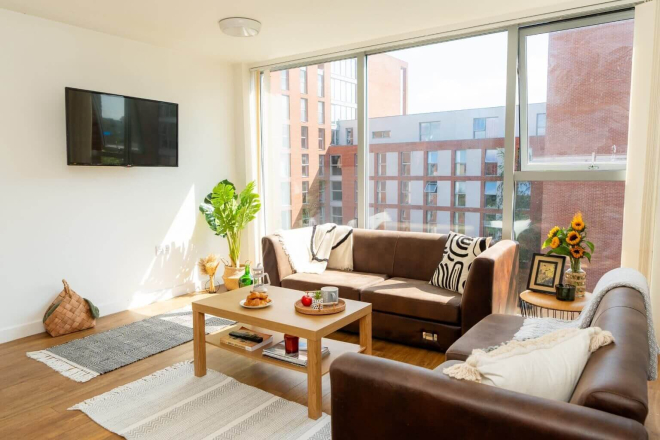
A shared house occupied by five or more people from two or more households who share facilities generally requires an HMO licence.
Manchester offers plenty of student accommodation, from university halls to private halls and shared houses. Much of it sits along the Oxford Road corridor and in neighbourhoods south of the city centre. The choice can feel overwhelming, especially when you're under pressure to book quickly. Contracts, included bills and payment terms all need a closer look before you commit.
This guide covers the main checks for a 2026/27 booking, whether you're a first-year student, a parent or moving from overseas. Manchester Student Homes (MSH), the university-backed housing service, offers contract checks. Providers such as Sanctuary Students publish property details that can help you compare private halls, but always confirm the terms for the room you're booking.
Key takeaways
- Choose the accommodation type first. University halls, private halls and shared houses offer different living arrangements and contract terms.
- Check payment rules. Holding deposits, tenancy deposits and rent in advance are different payments. Ask which rules apply to your agreement.
- Define "bills included". Get the inclusions, any usage limits and excess charges in writing.
- Check licensing. Larger shared houses need an HMO licence, and other local licensing requirements may apply.
- Compare the full cost. Weekly rent alone doesn't show what you'll pay over the contract.
- Get advice before signing. MSH or your Students' Union can help you understand unclear terms.
Decide your accommodation type
Start with the living arrangement that suits you. Consider how much support you want, whether you know potential housemates and how long you need the room.
University-managed halls. Agreements may be licences or tenancies, depending on the accommodation. Halls generally have set occupancy dates and resident support, and first-years may receive priority. Check room-allocation policies and early-release terms: you may have limited choice of flatmates and remain responsible for payments if you leave early.
Private halls. Purpose-built student accommodation, often shortened to PBSA, is run by private providers. Rent commonly includes utilities and broadband, sometimes with contents insurance. There may also be an on-site team. Read the agreement to confirm the support available, included costs and contract type.
Shared houses. A group rents a house from a private landlord, often under a joint tenancy. Bills may be separate or included. With a joint tenancy, you can be responsible for unpaid rent owed by another housemate, not just your own share. This option often suits students who already have a group ready to commit.
Your rights depend on the law and the actual arrangement, not simply whether the document is labelled a tenancy or licence. Check current guidance rather than relying on an older contract or a friend's experience.
Pick your area by commute, not by reputation
Fallowfield, Victoria Park, Rusholme and the city centre are common starting points for a Manchester accommodation search. Fallowfield is south of the main Oxford Road campuses and is usually a bus or cycle journey away. Parts of Victoria Park and Rusholme may be within walking distance, depending on your teaching buildings. Central accommodation can be convenient, but a city-centre address doesn't guarantee a short commute.
First, confirm which campus you'll use. The University of Manchester, Manchester Metropolitan University, the University of Salford and the Royal Northern College of Music publish campus maps. A room that's convenient for one institution may be awkward for another.
Then check the door-to-door journey at realistic times, such as a 9am lecture or a late return from the library. Look at service frequency, the last bus, the walk from the stop and available lighting. Include travel costs in your budget, whether that's a bus pass or a bike for the daily commute, rather than relying on unsourced "best area" or "safest area" rankings.
Shortlist smart: accreditation and verified listings
Accreditation is a useful starting point, though it isn't a substitute for checking the property and contract yourself.
MSH runs an accreditation scheme for private landlords letting to students. Members agree to property and management standards, and the service can advise on concerns. For larger student developments, check whether the provider belongs to a recognised accommodation code and what complaints process it offers.
International students can also look for the MSH International Friendly Standard. Ask participating landlords about their guarantor and payment arrangements, particularly if you don't have a UK-based guarantor. Confirm the policy for the specific listing before paying anything.
Right to Rent checks apply to many private rentals in England, but some student accommodation is exempt. Ask whether a check is required and whether you'll need identity documents or an online share code. Confirm who is handling the check before sending sensitive information.
A viewing checklist you can actually use
Take notes during a viewing and ask permission before taking photos. If current residents are available, ask how repairs are handled and whether noise, heating or internet access has caused problems.
Safety
- Look for smoke alarms and ask when they were last tested. Ask about carbon monoxide alarms where required.
- Check that escape routes are clear and ask about kitchen fire-safety equipment.
- Check that doors and windows close securely and that you can open exit doors from inside in an emergency.
- In halls, ask staff to explain the alarm and evacuation procedure rather than testing a linked system yourself.
Damp, air and water
- Look for mould, staining or peeling paint around windows, on ceilings and behind furniture. Notice any musty smell.
- Check that bathroom and kitchen extractor fans work.
- Test shower pressure and ask how hot water is supplied.
- Ask for a demonstration of the heating controls and check for restrictions on heating times or temperatures.
Everyday practicalities
- Check whether bike storage is secure and accessible.
- Find out where the laundry facilities are and what they cost.
- Locate bins, recycling points and parcel collection facilities.
- Test mobile reception in the room, not just the hallway.
- Confirm which furniture and appliances come with the room.
For a shared house, ask how many people and households will occupy it. That information helps you check whether it needs a House in Multiple Occupation (HMO) licence. Ask for any required licence number and verify it with Manchester City Council before signing.
Bills, Wi-Fi and what "all-inclusive" really means
"Bills included" doesn't mean the same thing in every agreement. Some packages have a fair-usage cap, which limits the energy covered by your rent. If you exceed it, you may face extra charges. Other packages work differently, so get the terms in writing.
Prefer managed halls with predictable bills? Consider student rooms in Manchester as advertised, but always check each property page for the exact inclusions, contract dates and availability before you book.
Ask these questions before booking:
- Which costs are included: gas, electricity, water, broadband or a TV Licence?
- Is there an energy allowance, and is it measured per person or per property?
- How are excess charges calculated, and can you monitor usage?
- Is broadband shared, is there an Ethernet connection in the room, and are any speeds guaranteed?
- Who handles internet faults, and when is support available?
Sanctuary Students advertises fully inclusive rents for its Manchester private halls, covering utilities, Wi-Fi and contents insurance. This can make budgeting simpler, but check the chosen property's page and agreement for the exact inclusions and insurance cover.
If contents insurance is included, check whether you need to register or activate it. Read the limits and exclusions, especially for laptops, bicycles and belongings taken outside your room.
A TV Licence is a separate check. Whether you need one depends on how you watch live television or use BBC iPlayer and how your accommodation is licensed. Consult TV Licensing's student guidance rather than assuming a communal licence covers your room.
Contract and money checks
Before transferring money, identify what each payment is for, when it is due and whether it is refundable. For 2026/27 bookings, use current GOV.UK guidance because changes to private renting do not affect every student agreement in the same way.
Holding deposits and rent in advance
A holding deposit reserves a property while the application is processed. Where the Tenant Fees Act applies, it is capped at one week's rent. Ask for written terms explaining when it will be refunded, put towards another payment or retained.
For private tenancies covered by the rent-in-advance rules introduced on 1 May 2026, landlords and agents cannot request rent before the agreement is signed. Student hall agreements may be treated differently. If you're asked for rent before signing or several months upfront, have MSH check which rules apply before paying.
Tenancy deposits
Where the Tenant Fees Act applies, a refundable tenancy deposit is capped at five weeks' rent if the annual rent is below £50,000, or six weeks' rent if it is £50,000 or more. Deposit protection requirements depend on the tenancy type. Where protection is required, the landlord must normally protect the deposit and provide the required information within 30 days of receiving it.
Keep the deposit paperwork. At move-in, take dated photos, check the inventory and report missing items or existing damage in writing.
Instalments and guarantors
Check the payment schedule rather than assuming it matches your student loan dates. Record each amount and due date, and ask about any charges you don't understand. A charge appearing in a contract doesn't automatically make it lawful.
If a guarantor is required, ask who qualifies and what they would be responsible for. Without a UK-based guarantor, you could explore landlords with international-friendly policies or a guarantor service accepted by the provider. Check fees and terms carefully. Don't assume a larger upfront rent payment is a permitted alternative.
Tenancy or licence?
The agreement type can affect notice, access to the property and your options if you need to leave. Ask MSH or your Students' Union for advice before signing, especially if you're unsure about joint liability, cancellation or finding a replacement resident. Keep a copy of the final agreement and any written promises about repairs or included services.
Safety and compliance you can verify
Start with licensing. A shared house occupied by five or more people from two or more households who share facilities generally requires an HMO licence. Smaller properties may also need a licence under local schemes. Check Manchester City Council's current requirements for the property's address and verify any licence details against its register.
In shared buildings, look for clear escape routes and fire doors that close properly where fitted. Ask for the resident fire-safety guidance. Don't prop open fire doors or assume another resident will report a fault.
For a private rental, ask for the current gas safety record if there is a gas installation, along with the electrical safety documentation required for the property. If something is missing or unclear, get advice rather than relying on a verbal assurance.
Term lengths, payment schedules and budgeting
Two rooms with the same weekly rent can have different total costs because their contract lengths differ. Compare the actual move-in and move-out dates, not just a description such as "academic year". A shorter agreement may save rent but leave you needing summer accommodation or storage.
Write down the full amount payable, each instalment and any initial payment credited towards the rent. Add laundry, travel, uncovered bills and any storage costs. Then compare payment dates with your loan or other funding dates to identify a shortfall before accepting.
Also check whether you can stay during holiday periods and whether the dates cover your course commitments. Placements, exams and resits may extend beyond the teaching timetable.
Check for building work before booking
If you're considering Fallowfield, check the university's latest redevelopment updates rather than relying on older completion dates or room totals. For any area, ask whether nearby building work could affect noise, access or shared facilities during your stay. Base your decision on confirmed availability, not an assumption that a planned development will open on schedule.
Where to compare options
Begin with your university's accommodation pages for managed halls, application dates and full terms. Next, use MSH to explore accredited private listings. Accreditation provides a useful baseline, but you should still review the individual property and agreement.
For private halls, compare Sanctuary Students' property pages and those of other providers. Check each property's inclusions, contract dates and availability. Apply the same viewing and payment checks to every provider, and compare the total cost for the period you need rather than weekly rent alone.
Quick pre-booking checklist
- Required identity documents or Right to Rent evidence confirmed, where applicable
- Guarantor requirements understood, or an accepted alternative agreed in writing
- Holding deposit, rent in advance and refund terms checked against the rules for your agreement
- Tenancy deposit amount and any protection requirements confirmed
- Included bills, usage limits and excess charges set out in writing
- Broadband arrangements and support contact confirmed
- Contents insurance cover and any activation requirement checked
- Council Tax position checked, particularly if anyone in the household is not a qualifying full-time student
- Any required property licence verified with the council
- Move-in and move-out dates confirmed against your course timetable
- Total cost, instalments and permitted charges recorded
- Repair reporting process and emergency contact confirmed
- Cancellation, early-release and replacement-resident terms understood
- Any unclear contract terms reviewed by MSH or your Students' Union
Before you sign
Allow time for checks before a booking deadline. Whether you choose university halls, a shared house or managed accommodation from a provider such as Sanctuary Students, confirm the total cost, the room's condition and your obligations in writing. If a payment request or contract clause remains unclear, ask the university or MSH for advice before committing.