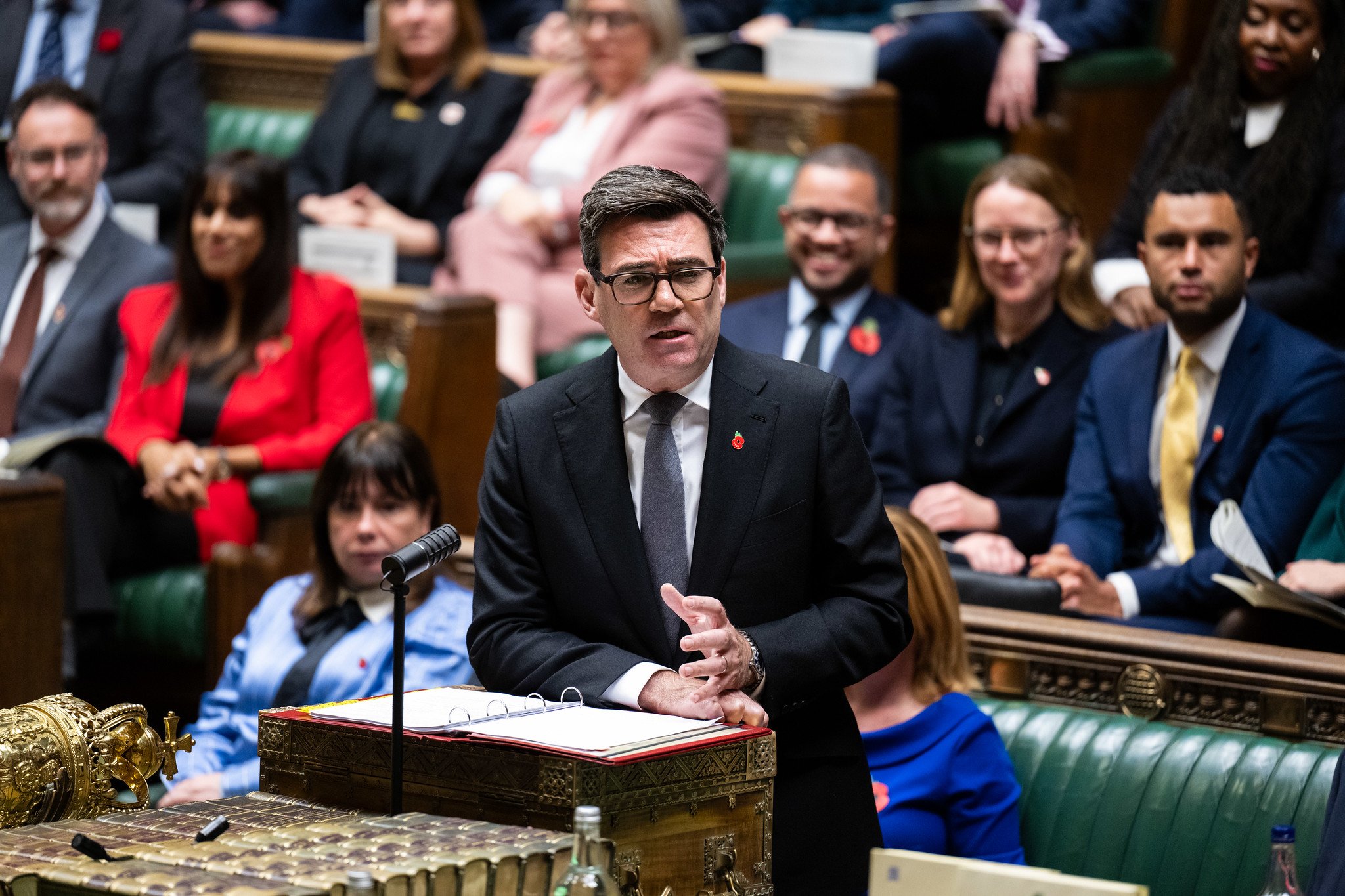
Burnham commits UK to 2050 net-zero target
Andy Burnham has committed the UK to the 2050 net-zero target in a speech at the Cop31 climate summit.
Burnham told delegates that the climate crisis affects everyone now. One report of the speech says he also described climate change as a "national security issue", and that he declared "Britain is back" at the summit.
The security framing
The security language is a shrewd piece of positioning. Climate policy has long been filed under good intentions, alongside recycling and the more tedious sort of charity gala. Security is a different drawer entirely. It is where governments keep the things they are not allowed to cut when the Treasury starts sharpening its pencil.
Recasting net zero in those terms makes it harder to wave away as a lifestyle preference. It also allows a prime minister to talk about energy, borders and resilience in the same breath, a useful trick for anyone hoping to hold together a coalition of voters who care about the planet and voters who care mainly about the gas bill.
Whether it persuades the sceptics is another matter. Security arguments cut both ways. Opponents of rapid decarbonisation have been quick to argue that a country should not hobble its own industry in the name of safety. That line is likely to be used against him, and soon.
The scrutiny ahead
A 2050 target is, by design, a long way off. That is its great political convenience and its great weakness. Those who set it will not be around to answer for missing it, which is precisely why it attracts so much suspicion from those who will have to pay for getting there.
Business will want to know what the commitment means for the cost of doing things, and when. Opposition parties will want to know the same, with rather more theatre. Both have a fair point. A target without a delivery plan is a wish, and the history of British climate ambition is not short of wishes that met a spending review and lost.
A commitment has been made at a summit. That is not the same as legislation passed, a budget allocated or a power station closed. The distance between a speech in front of delegates and a policy that survives contact with a Commons committee is where most political promises go to die, quietly and usually on a Friday.
Britain is back
The second reported flourish, "Britain is back", is a phrase with a long and slightly worn pedigree, deployed by leaders of various stripes whenever they want a country to feel it has rejoined the adult table. It has the great merit of being unfalsifiable. Back to what, exactly, is left for the audience to decide.
In a climate setting it carries a specific weight. Britain once styled itself a leader on this subject, hosting a major summit and making a good deal of noise about it. Since then the mood has been less certain, with commitments softened, delayed and occasionally mislaid. To announce a return is to admit, gently, that somebody left. Burnham may not mind. Contrast is a useful thing to have in politics, and his predecessors have supplied plenty.
The risk is the familiar one. Announce a comeback loudly enough and the public starts looking for evidence of it. Voters tend to measure these things not in communiques but in what turns up on the doorstep, in the energy bill, in the price of a new boiler or a train ticket. A grand declaration abroad is judged at home, and usually by people who were not invited to the summit.
None of this makes the commitment wrong. A government that sets a direction and tells industry to plan around it is doing something useful, whatever the opposition says. But the test of Burnham's speech will be the applause it earned in the hall only briefly. The real test will be whether, some winter from now, an energy minister can stand up in the Commons and explain the plan without needing the word "security" to carry the whole argument by itself.