Search engine optimization involves much more than publishing content and adding keywords to a website. While technical performance, useful information, and on-page optimization are essential, backlinks remain an important part of how search engines discover and evaluate relationships between websites. This is why businesses invest in SEO link building services to strengthen their online presence, attract relevant visitors, and improve their opportunities to compete in organic search results.
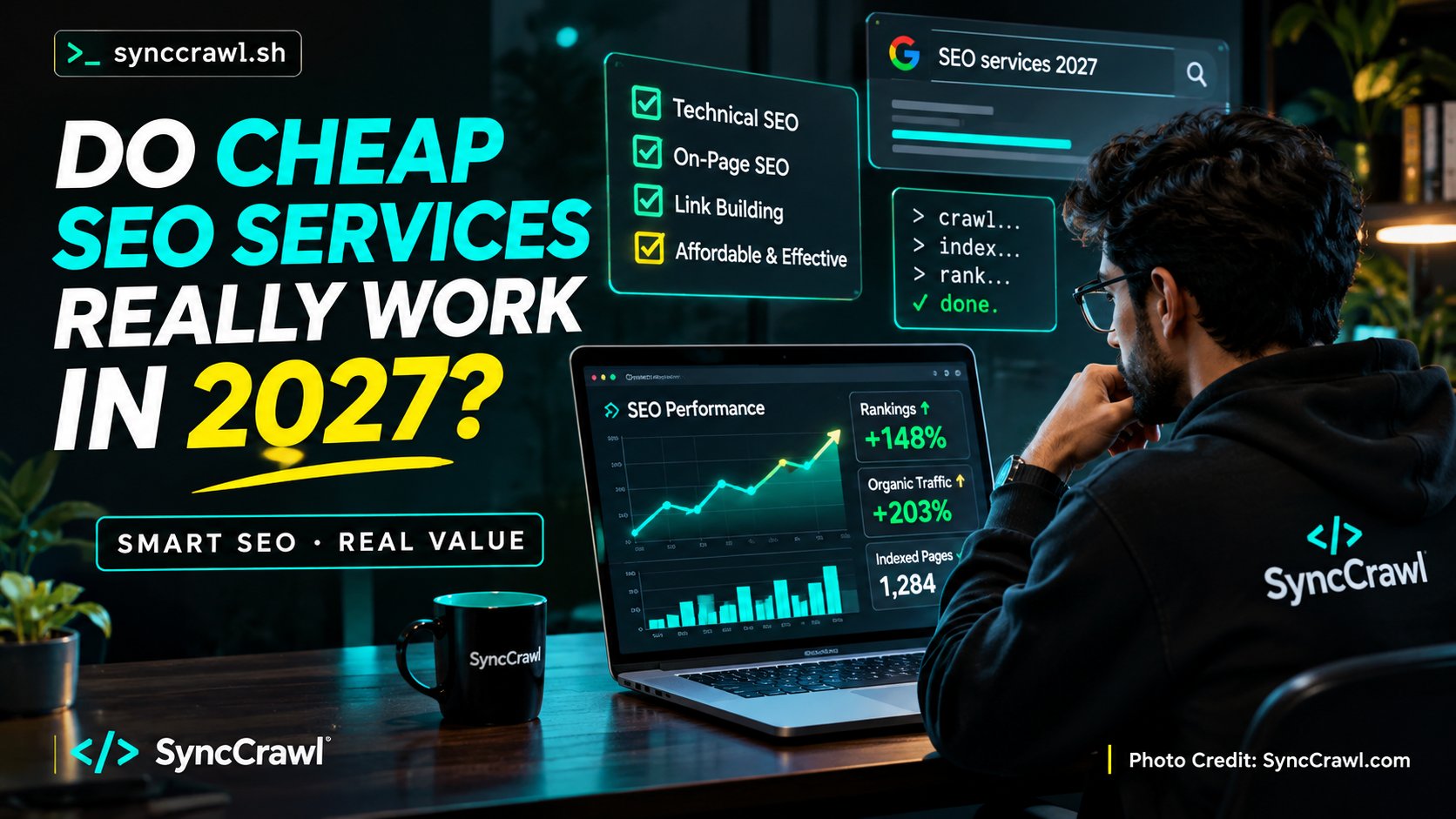
However, not every backlink delivers the same value, and simply purchasing hundreds of links will not guarantee higher rankings. The effectiveness of link building depends on relevance, website quality, editorial credibility, and how naturally links are acquired. Businesses looking for affordable, professional optimization can explore SyncCrawl, a freelance-led SEO service offering support for website optimization and link building.
So, do SEO link building services actually help improve Google rankings? The answer is yes, but understanding how backlinks work—and which practices to avoid—is essential before investing.
What Are SEO Link Building Services?
SEO link building services involve researching, developing, and earning backlinks from external websites. A backlink is a clickable hyperlink that directs visitors from one website to another.
For example, imagine a digital marketing blog publishing an article about website optimization. Within that article, the author references a detailed technical SEO tutorial published on another website. That reference creates a backlink to the tutorial.
Professional link building services help businesses identify relevant opportunities for similar editorial references through content promotion, outreach, digital PR, and professional relationships.
The objective should be to earn links that provide genuine value to readers, rather than create artificial signals solely to influence rankings.
How Do Backlinks Help Improve Google Rankings?
Google uses many signals to understand webpages, including content relevance, website accessibility, and links between pages. Backlinks can contribute to its understanding of how information is connected across the internet.
1. Backlinks Can Strengthen Content Credibility
When relevant websites reference useful content, those links may help demonstrate that the information deserves attention.
For example, a financial education website referenced by established financial publications may gain relevant exposure and stronger connections within its industry.
However, search engines do not treat every link equally. A link from an unrelated or low-quality page may offer little ranking value.
2. Backlinks Help Search Engines Discover Content
Search engine crawlers follow hyperlinks to discover webpages.
When a published article links to another resource, that connection can provide an additional discovery path.
However, backlinks do not guarantee indexing. Important technical issues or indexing restrictions can still prevent a page from appearing in search results.
3. Quality Links Can Generate Referral Traffic
A valuable backlink can attract visitors directly from another website.
For example, readers of a relevant industry publication may click a reference to your business guide and become potential customers.
This referral traffic can provide measurable business value even when the link does not produce an obvious ranking improvement.
What Makes an SEO Backlink High Quality?
One of the biggest misconceptions about link building is that more backlinks always mean better rankings.
In practice, evaluating link quality requires considering several important factors.
Website Relevance
A backlink should make sense within the linking website's subject matter.
For example, an SEO tutorial referenced by a technology or marketing publication is contextually relevant. A link from an unrelated entertainment website may offer limited value.
Editorial Credibility
The best opportunities generally involve links that publishers choose to include because a resource helps their readers.
An editorial mention within a well-researched article is different from a link placed on a page created primarily to sell backlinks.
Audience and Content Quality
A smaller website with a knowledgeable, relevant audience can be more useful than a larger website whose visitors have little interest in your services.
Content quality, genuine readership, and topical relevance should therefore receive considerable attention.
Natural Anchor Text
Anchor text is the clickable wording used for a hyperlink.
Natural anchor text describes the linked resource without unnecessarily repeating exact-match commercial keywords.
A healthy editorial linking pattern usually contains a variety of descriptive phrases, brand mentions, and relevant references.
Which Link Building Strategies Actually Work?
Professional SEO link building services may use several legitimate approaches to help websites earn useful references.
Guest Blogging
Guest blogging involves contributing original articles to relevant publications.
A business can demonstrate expertise, reach new readers, and potentially earn an appropriate editorial reference.
However, guest blogging should focus on useful content rather than large-scale distribution of keyword-heavy backlinks.
Digital PR and Editorial Outreach
Digital PR involves attracting coverage from journalists, bloggers, and industry publications.
Original research, useful statistics, expert commentary, and educational reports can provide publishers with valuable material to reference.
These opportunities may generate both backlinks and brand awareness.
Broken Link Building
Broken link building involves finding external links that point to missing webpages.
If your website offers a relevant alternative, you can contact the publisher and suggest it as a replacement.
The proposed resource should genuinely match the original topic.
Link-Worthy Content Creation
Publishing original resources can encourage people to link naturally.
Detailed tutorials, research reports, practical checklists, industry comparisons, and free tools are examples of content that may attract editorial references.
This strategy supports link building by giving publishers something worth recommending.
Can Cheap Backlinks Negatively Affect Your Website?
Affordable link building is not automatically harmful. A skilled freelance specialist may provide valuable outreach services at a reasonable price.
The problem begins when low-cost packages prioritize backlink quantity over relevance, editorial quality, and compliance with search engine policies.
Some providers advertise hundreds or thousands of backlinks for extremely low prices. These links may be generated automatically or placed on websites that exist primarily to manipulate search rankings.
Types of Backlinks That May Create SEO Risks
Private Blog Network Links: Some networks consist of websites controlled mainly to pass ranking value to paying customers. Links created for this purpose can violate search engine spam policies.
Automated Forum and Comment Links: Repeated promotional links placed through automated comments, profiles, or forum posts often provide little genuine value.
Irrelevant Directory Links: Submitting websites to hundreds of unrelated directories rarely delivers meaningful exposure and may become part of a manipulative linking scheme.
Paid Links That Pass Ranking Credit: Purchasing links specifically to manipulate rankings can violate Google's policies. Advertising and sponsored placements should use appropriate link attributes.
Excessive Link Exchanges: Large-scale arrangements where websites repeatedly exchange links primarily to influence rankings can also create risks.
Over-Optimized Anchor Text: Repeatedly acquiring backlinks using identical commercial keywords may contribute to an unnatural linking pattern.
These practices can result in links being discounted, and serious manipulative activity may lead to manual actions or reduced search visibility.
However, receiving an unfamiliar or spam-looking link does not automatically mean your website has been penalized. Google can recognize and ignore many unnatural links without requiring action from the website owner.
Understanding Negative SEO and Harmful Backlink Patterns
Suspicious backlink activity is sometimes associated with negative SEO, which refers to deliberate attempts to damage another website's search visibility or online reputation.
Not every unusual backlink indicates malicious activity. A sudden traffic decline may also result from algorithm changes, technical errors, indexing issues, or stronger competition.
Before deleting or disavowing links, website owners should investigate the circumstances carefully.
For a more detailed explanation of potentially harmful backlink practices, warning signs, and how to distinguish genuine threats from ordinary link spam, read SyncCrawl's informative guide about negative SEO.
Understanding these risks helps businesses make better decisions when selecting an SEO link building provider.
How Long Does Link Building Take to Improve Rankings?
Link building is a long-term SEO activity rather than an instant ranking solution.
The time required to observe measurable changes depends on several factors, including website history, keyword competition, content quality, technical performance, and the relevance of acquired links.
A newer website entering a highly competitive industry may require substantially more effort than an established business targeting specialized local searches.
Some useful backlinks can generate referral traffic relatively quickly, while broader organic ranking improvements may take months.
There is no guaranteed timeline because Google evaluates many factors beyond backlinks.
How to Choose a Reliable SEO Link Building Service
Choosing the right provider is essential for protecting your marketing budget and developing a sustainable SEO strategy.
Before purchasing a service, ask how potential linking websites are evaluated and whether the provider uses original content, relevant outreach, or legitimate editorial opportunities.
A trustworthy provider should clearly explain its methods and offer realistic expectations. It should also report the websites contacted, links earned where appropriate, and the broader results of the campaign.
Avoid agencies or freelancers promising guaranteed first-page rankings, undisclosed link networks, or thousands of backlinks without providing meaningful information about their sources.
The best service is not necessarily the most expensive. It is the one that provides relevant, transparent, and professionally managed work that suits your website.
How to Measure the Success of a Link Building Campaign
Backlink quantity should never be the only measure of success.
Businesses should also monitor the number of relevant referring domains, referral traffic from external publications, organic search visibility, and conversions generated by visitors.
Google Search Console and website analytics tools can help identify broader performance trends.
However, changes in rankings should not automatically be attributed to individual backlinks. Technical improvements, content updates, competition, and search demand can also influence performance.
The most useful measurement combines the quality of earned links with the actual value they bring to the website.
Final Verdict: Are SEO Link Building Services Worth It?
Yes, professional SEO link building services can help improve search visibility when they focus on relevance, editorial quality, and sustainable optimization.
Backlinks can help search engines discover content, support relationships between useful resources, and introduce businesses to relevant audiences.
However, link building works best when combined with informative content, strong on-page SEO, and a technically accessible website.
The greatest mistake businesses can make is confusing cheap backlinks with affordable professional link building. Low pricing is not necessarily a problem, but artificial link schemes and mass-produced spam links can create unnecessary risks.
A responsible SEO strategy emphasizes meaningful editorial references rather than simply collecting the largest possible number of backlinks.
Ultimately, successful link building is not about how many websites link to yours. It's about earning relevant references that strengthen your online presence, attract useful traffic, and support sustainable long-term growth.