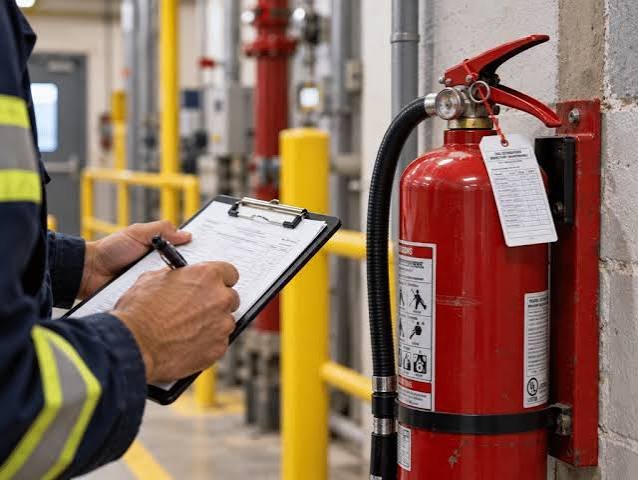
Fire safety involves much more than installing alarms and keeping extinguishers nearby. Every building has its own combination of potential hazards, from the way rooms are arranged to the activities carried out inside. When these risks are not properly managed, even a minor incident can place occupants in danger.
A fire risk assessment offers a structured way to examine these concerns before they lead to an emergency. Rather than concentrating on individual fire safety devices, an assessment considers how the building operates as a whole, whether people can escape safely and how effectively existing precautions could limit the consequences of a fire.
The assessment is particularly relevant to landlords, managing agents and business owners responsible for buildings used by different occupants. In many circumstances, fire safety legislation also requires a suitable and sufficient assessment to be completed and maintained.
Liviosiv provides professional fire risk assessment services for residential, commercial and mixed-use properties throughout London.
This guide explores how fire risks are evaluated, who has legal responsibilities, what an inspection involves and how property owners can use the findings to improve building safety.
Understanding the Purpose of a Fire Risk Assessment
A Fire Risk Assessment (FRA) examines the circumstances that could allow a fire to start, develop or spread within a building. It also considers the people who might be affected and the precautions available to protect them.
The aim is to recognise hazards, evaluate the associated risks and identify reasonable measures for reducing them.
Each property requires an assessment that reflects its actual use and layout. For instance, a restaurant kitchen presents different fire hazards from a residential apartment block with shared staircases.
A competent assessor may examine ignition sources, combustible materials, means of escape, fire-resistant construction and the building's fire safety management arrangements.
Fire doors, alarm systems, emergency lighting and firefighting equipment may also form part of the assessment.
Once the relevant information has been gathered, the assessor prepares a report outlining the findings and recommended improvements.
Property owners looking for a fire risk assessment in London can contact Liviosiv to discuss the requirements of their building.
How Fire Hazards Develop in Buildings
A building's fire safety arrangements can change over time, sometimes without those responsible immediately recognising the consequences.
A communal corridor that was previously clear may gradually become a storage area. A self-closing fire door may develop a fault, or refurbishment work may affect the fire-resistant separation between parts of the building.
Individually, these changes can appear minor. During a fire, however, they may affect how smoke travels or how quickly people can reach a safe exit.
An assessment considers these conditions together rather than viewing each fire safety feature in isolation.
Identifying Problems Before an Emergency
Recognising potential hazards early allows property managers to organise appropriate improvements.
For example, an assessment might identify an escape route obstructed by stored items, inadequate maintenance records or a fire door that no longer closes effectively.
The recommendations can then be used to prioritise corrective work based on the seriousness of the risk.
Protecting Different Building Occupants
Fire safety arrangements should reflect the people who use the premises.
A workplace occupied during normal business hours may require different evacuation arrangements from accommodation where residents are sleeping overnight.
The assessor considers occupancy, building use and people who may need additional assistance during an emergency.
Supporting Ongoing Fire Safety Management
A fire risk assessment should contribute to a continuing process of monitoring, maintenance and improvement.
Its findings can help those responsible for a building decide which precautions need immediate attention and which measures should be included in future maintenance plans.
Fire Risk Assessment Legal Requirements in England and Wales
The Regulatory Reform (Fire Safety) Order 2005 establishes the principal fire safety framework for most non-domestic premises and relevant parts of residential buildings in England and Wales.
Under this legislation, the Responsible Person must ensure that a suitable and sufficient assessment of fire risks is undertaken.
The duty commonly applies to workplaces, commercial buildings and shared areas of buildings containing multiple domestic premises.
The Fire Safety Act 2021 clarified the application of the Fire Safety Order to the structure, external walls and flat entrance doors of buildings containing two or more sets of domestic premises.
Further changes introduced through Section 156 of the Building Safety Act 2022 strengthened requirements concerning the recording of fire risk assessments and fire safety arrangements.
These developments place significant importance on maintaining reliable records and ensuring appropriate action is taken when risks are identified.
However, the relevant duties depend on the building and the extent of the Responsible Person's control.
For further guidance, property managers can consult GOV.UK fire safety responsibilities.
Who Holds Responsibility for Fire Safety?
Responsibility is determined by control of the premises and the duties established under the applicable legislation.
In a workplace, the employer will generally be a Responsible Person. In other settings, responsibility may rest with an owner, landlord or someone exercising control over relevant parts of a building.
Landlords and Residential Building Owners
Landlords and freeholders may have responsibilities for shared corridors, staircases and other relevant parts of multi-occupied residential buildings.
They need to ensure that suitable fire safety arrangements are maintained within the areas for which they are responsible.
Employers and Commercial Occupiers
Businesses must consider how their activities could create fire hazards.
The assessment should account for employees, customers, contractors and others who may be affected by a fire.
Property Management Companies
Managing agents may undertake fire safety functions on behalf of building owners.
Their responsibilities depend on the arrangements in place and the level of control they exercise.
Where more than one Responsible Person exists, cooperation and coordination are necessary.
Appointing a professional assessor can assist with evaluating fire risks, but it does not automatically transfer the Responsible Person's legal duties to that assessor.
What Does a Professional Fire Risk Assessment Involve?
A professional inspection should reflect the property's construction, layout, occupation and existing fire precautions.
The assessor begins by developing an understanding of how the premises are used and where significant hazards may arise.
Reviewing Potential Fire Sources
The examination considers activities and equipment that could cause ignition.
Examples may include cooking operations, heating equipment, electrical systems, storage practices and other relevant processes.
The assessor also considers combustible materials and how they could contribute to the development of a fire.
Examining Escape Arrangements
A critical part of the assessment concerns whether occupants have appropriate means of escape.
Escape routes, staircases, final exits and relevant doors are examined in relation to the building's arrangements.
The assessor considers whether people are likely to receive adequate warning and whether the available routes are suitable for the building's use.
Evaluating Existing Fire Protection
Relevant precautions may include fire alarms, emergency lighting, fire doors, compartmentation, safety signage and firefighting equipment.
The assessor may also review inspection records, maintenance arrangements and emergency procedures.
The precise checks depend on the type and scope of the assessment.
Preparing Practical Recommendations
After reviewing the hazards and precautions, the assessor determines where action is required.
Recommendations should explain the concerns identified and provide sufficient information for the Responsible Person to arrange suitable improvements.
The resulting report becomes an important reference for future fire safety management.
Fire Risk Assessments for Residential Buildings
Residential properties can present complex fire safety challenges because occupants may be unfamiliar with building-wide safety arrangements or may be asleep when a fire begins.
In apartment blocks, shared corridors and protected staircases may form essential parts of the escape strategy.
Older converted buildings may present different concerns relating to construction, internal layout and fire separation.
A residential assessment considers these features alongside the building's occupancy and management arrangements.
Fire Safety in Blocks of Flats
For a block of flats, the assessment may focus on communal escape routes, relevant fire doors, compartmentation and building-wide fire safety precautions.
The assessor also considers the suitability of existing management procedures.
A standard Type 1 fire risk assessment generally involves a non-destructive examination of common parts and relevant building-wide features.
It does not ordinarily include a full internal inspection of every individual flat.
Where there are indications of concealed defects, further investigation may be recommended.
Liviosiv provides residential fire risk assessment services in London for landlords, freeholders and property management companies.
Fire Safety Considerations for HMOs
Houses in Multiple Occupation (HMOs) may involve several unrelated occupants sharing facilities and circulation areas.
These arrangements can create particular challenges for fire safety management.
Residents may have different routines, while shared kitchens and escape routes can experience frequent use.
The assessment should consider the suitability of fire detection, fire doors, protected escape routes and other precautions relevant to the building.
For example, an HMO may require a different alarm arrangement from a single-family home, depending on the layout, occupancy and applicable requirements.
Emergency lighting, fire separation and the management of shared spaces may also need attention.
The appropriate precautions should be determined by the circumstances of the property rather than assuming all rented accommodation requires identical measures.
Fire Risk Assessments for Commercial Premises
The activities taking place inside a commercial building can significantly influence its fire risk profile.
In an office, considerations may include electrical equipment, occupancy levels and evacuation procedures.
Restaurants and hospitality venues may have additional hazards associated with cooking, extraction equipment and combustible materials.
Warehouses and industrial premises may present different concerns relating to storage, machinery and working processes.
A commercial fire risk assessment evaluates these activities alongside the building's construction, escape arrangements and existing fire precautions.
The review may include alarm and detection systems, firefighting equipment, emergency lighting, staff procedures and relevant maintenance records.
The findings can help businesses determine whether their current precautions remain suitable and identify where changes are necessary.
Liviosiv offers fire safety assessments for various commercial buildings and mixed-use premises across London.
Property owners managing several compliance obligations can also explore Liviosiv's fire risk assessment and asbestos survey services.
What Determines the Cost of a Fire Risk Assessment in London?
The amount of work involved in assessing a building can vary considerably.
A small property with a straightforward layout may require a different assessment process from a multi-storey building containing several occupancies.
For this reason, the fire risk assessment cost is normally influenced by the characteristics of the premises.
Factors such as floor area, building height, layout, occupancy and complexity of existing fire safety arrangements can affect the quotation.
The agreed assessment scope and accessibility of relevant areas are also important.
Liviosiv publishes the following indicative prices:
Indicative Price
Studio residential property
From £77
1–3 bedroom residential property
From £137
4–6 bedroom residential property
From £167
Communal area
From £118
Commercial premises up to 3 floors
From £197
Commercial premises with 3–5 floors
From £237
Larger or complex buildings
Quotation required
These are indicative advertised prices and should be confirmed with Liviosiv before booking.
When comparing quotations, customers should establish whether the proposed service includes the site assessment, written findings and an action plan.
Any repairs or improvements recommended after the assessment will normally be quoted separately.
What Information Should a Fire Risk Assessment Report Provide?
The written report is one of the main outcomes of the assessment.
It should explain the significant findings in a way that allows the Responsible Person to understand the risks and decide what action is needed.
A report generally includes information about the building, its use and the scope of the assessment.
It may document the people considered at risk, relevant fire hazards, existing precautions and deficiencies identified during the inspection.
Recommendations should be sufficiently clear to support the organisation of corrective work.
Where appropriate, the report may include photographs and indicate the relative priority of different actions.
Is a Fire Risk Assessment Certificate the Same as a Report?
The term fire risk assessment certificate is commonly used by property owners searching for evidence of an inspection.
However, the Fire Safety Order does not establish a universal government-issued certificate that replaces the assessment itself.
The essential record is the fire risk assessment, including its findings and relevant fire safety information.
A service provider may supply an additional confirmation document, but the detailed report remains important for understanding and managing the identified risks.
When Should an Existing Fire Risk Assessment Be Reviewed?
A fire risk assessment needs to reflect the building's current circumstances.
An assessment prepared several years ago may no longer be suitable if significant alterations have taken place or the way the premises are used has changed.
There is no universal statutory expiry period applicable to all fire risk assessments.
Instead, the Responsible Person must review the assessment regularly and where there is reason to believe it is no longer valid.
Changes That May Require a Review
A review may become necessary following building refurbishment, changes in occupancy, modifications to escape routes or the introduction of new activities.
A fire incident, significant near miss or discovery of new hazards may also provide grounds for reassessing the existing precautions.
Some organisations adopt annual review arrangements as part of their management procedures.
However, review frequency should reflect the building's circumstances and risks rather than relying exclusively on a calendar date.
How Should Property Owners Respond to Fire Safety Defects?
An assessment may reveal problems that require action, but not every finding carries the same level of urgency.
A serious defect affecting an essential escape route may need immediate attention.
Other recommendations may concern improvements that can be organised through a suitable maintenance programme.
The Responsible Person should consider the assessment findings and ensure that actions are prioritised appropriately.
Common Fire Safety Improvements
Fire door repairs
A damaged or poorly closing fire door may require adjustment, replacement components or more extensive remedial work.
Alarm system improvements
The assessment may identify problems with the suitability, condition or maintenance of fire detection and warning arrangements.
Emergency lighting maintenance
Defective or inadequate emergency lighting may need repair, replacement or further assessment.
Escape route management
Obstructions and unsuitable storage arrangements may require changes to building management practices.
Fire compartmentation repairs
Where fire-resisting construction has been compromised, suitable remedial work may be necessary.
Following completion, records of the work should be maintained with the relevant fire safety documentation.
The aim is to create a clear record showing how identified concerns have been addressed.
What Should You Look for in a Fire Risk Assessor?
The usefulness of a fire risk assessment depends significantly on the competence of the person carrying it out.
Fire risk assessors need sufficient knowledge to understand building fire hazards, evaluate precautions and recognise when specialist advice is required.
This can involve familiarity with fire safety legislation, building construction, means of escape, fire protection systems and relevant risk assessment methods.
Experience with similar premises is also important.
For instance, assessing a relatively simple office is not necessarily equivalent to evaluating a complex residential building with multiple occupancy arrangements.
When selecting an assessor, customers should consider relevant training, qualifications, experience and appropriate professional registration or certification.
Suitable insurance and clear reporting arrangements may also be relevant.
Liviosiv advertises assessments using a methodology informed by PAS 79 principles.
Customers should confirm the qualifications and experience of the individual undertaking their assessment, particularly for more complex premises.
Fire Risk Assessment Services Throughout London
London contains buildings with widely differing fire safety characteristics.
Historic converted houses, modern residential developments, retail premises and large commercial buildings each present distinct assessment requirements.
For older buildings, the assessor may need to consider the effect of previous alterations and the condition of fire-resistant construction.
In modern developments, the assessment may involve reviewing more complex communal fire safety arrangements and management responsibilities.
The appropriate approach should be based on the actual premises rather than a standard checklist applied identically to every building.
Liviosiv provides fire risk assessment services in London, including Central, East, West, North and South London.
Its service coverage includes Westminster, Soho, Marylebone, Stratford, Canary Wharf, Ealing, Hammersmith, Wimbledon, Greenwich and Croydon.
Landlords, managing agents, freeholders and businesses searching for a fire risk assessment near me can contact Liviosiv to discuss their property and request a quotation.
Frequently Asked Questions About Fire Risk Assessments
Is a fire risk assessment mandatory for every building?
Not every property falls under identical requirements. In England and Wales, the Fire Safety Order applies to most non-domestic premises and relevant parts of certain residential buildings. The specific responsibilities depend on the premises and its use.
Can a business owner complete their own fire risk assessment?
A Responsible Person may undertake the assessment if they possess the necessary competence. Where the building or its fire risks are complex, employing a suitably competent professional is often appropriate.
Do apartment buildings require fire risk assessments?
Buildings containing two or more sets of domestic premises generally have relevant fire safety obligations concerning common parts and building elements within the scope of the Fire Safety Order.
Are fire door inspections part of an FRA?
Relevant fire doors may be considered during a fire risk assessment. However, where a detailed examination of individual door assemblies is needed, a separate specialist fire door inspection may be recommended.
How long does a fire risk assessment inspection take?
The time needed varies according to the size, layout and complexity of the premises. Smaller buildings may require relatively short visits, while larger or more complicated properties can involve considerably more inspection time.
Do HMOs need a fire risk assessment?
HMOs can be subject to fire safety requirements under relevant fire and housing legislation. The appropriate assessment and precautions depend on the property and how it is occupied.
Is there an official expiry date for a fire risk assessment?
There is no single statutory expiry date for every FRA. The assessment must be reviewed regularly and updated when circumstances indicate it is no longer suitable.
What happens when serious fire safety concerns are identified?
The Responsible Person must consider the findings and arrange appropriate measures to address the risks. Serious hazards may require immediate action, while other improvements may be prioritised according to their significance.
Can an FRA identify problems with an existing fire alarm?
Yes. An assessor may identify deficiencies in alarm provision, suitability or maintenance. However, detailed specialist testing or design work may need to be undertaken separately.
Is the cheapest fire risk assessment always suitable?
Price alone does not establish the quality of an assessment. The assessor's competence, the agreed inspection scope and the usefulness of the written findings are important considerations.
Final Thoughts: Building a Safer Property Through Fire Risk Assessment
Fire safety requires continued attention because the condition and use of a building can change over time.
A fire risk assessment helps those responsible understand how fire hazards could affect occupants and whether existing precautions are appropriate.
For landlords and property managers, the findings can support safer communal areas, better maintenance planning and compliance with applicable fire safety duties.
Businesses can also use the assessment to review workplace hazards and improve emergency arrangements.
However, the greatest benefit comes when the findings lead to meaningful action.
Addressing identified defects, maintaining important fire protection measures and reviewing the assessment when circumstances change all contribute to effective fire safety management.
Arrange a Fire Risk Assessment in London With Liviosiv
Liviosiv works with residential and commercial property owners who need fire risk assessments and related property compliance services.
Whether you manage a block of flats, an HMO, commercial premises or a mixed-use building, the team can discuss the assessment requirements and provide a quotation based on the property.
Office Address: 34 Ennismore Avenue, Greenford, England, UB6 0JN
Telephone: +44 20 4617 8121
Email: contact@liviosiv.co
Website: https://liviosiv.co/
Contact Liviosiv to discuss your building's fire safety requirements, request an assessment quotation or arrange an inspection.