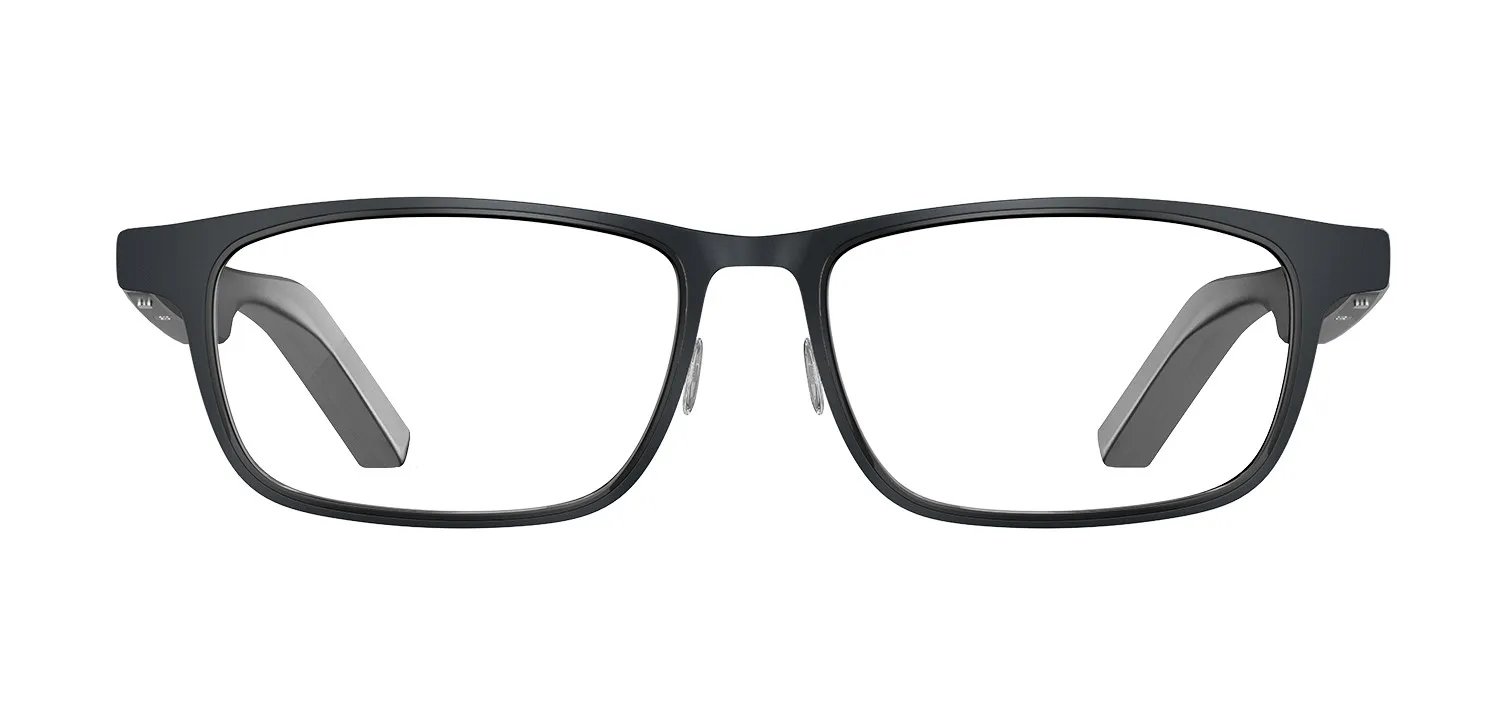
Google and Samsung have released smart glasses built on Android XR, putting the two companies into direct competition with Meta in a category that has so far been dominated by its Ray-Ban and Oakley glasses.
Early reviewers are treating Google's AI glasses as a serious rival to Meta's range. That marks a shift in a market where Meta has had much of the attention, and where other manufacturers have struggled to mount a credible challenge.
The launch brings the Android XR platform, which Google and Samsung have developed together, out of the demonstration stage and into products that can be bought. Google is leaning on its AI tools as the main selling point of the glasses.
Privacy
Google has made privacy a visible part of the launch. The company says it is taking steps to make its smart glasses more private, and it has been keen to stress that it takes the issue seriously.
Camera-equipped glasses have drawn criticism since their earliest versions, with concerns centring on bystanders who may be recorded without knowing it and on what happens to the data the devices collect. Meta's glasses have faced the same scrutiny, and Google appears determined not to inherit it.
Google has not been the only company asked about this. Any maker of glasses with built-in cameras and microphones is now expected to explain how it deals with the people around the wearer, not only the wearer themselves.
Early reaction
Reviews so far have been broadly favourable to Google's approach. At least one reviewer has said that time with the early Android XR smart glasses changed their opinion of glasses without displays, a design many in the industry had regarded as a stepping stone rather than a destination.
Glasses without a screen in the lens rely on audio, a camera and an AI assistant rather than overlaying information on the wearer's view. For some testers, the Google and Samsung models have made that simpler approach look more useful than they expected.
The comparison with Meta runs through much of the early coverage. Meta has spent several years building its glasses into a recognisable product, and reviewers now see Google as having arrived with something that can stand beside it.
The competition
For Meta, the arrival of a rival from Google and Samsung changes the picture. Until now its glasses have had the market largely to themselves, helped by fashion partnerships that made them look like ordinary eyewear.
For Samsung, the glasses extend its work on Android XR beyond headsets. For Google, they are a new route for its AI assistant onto the face of the user, a position it has been seeking since the first Google Glass failed to catch on more than a decade ago.
Shoppers weighing a first pair of smart glasses now have a genuine choice between two large technology groups, each with its own AI tools and its own answer on privacy.
Photo: Unsplash