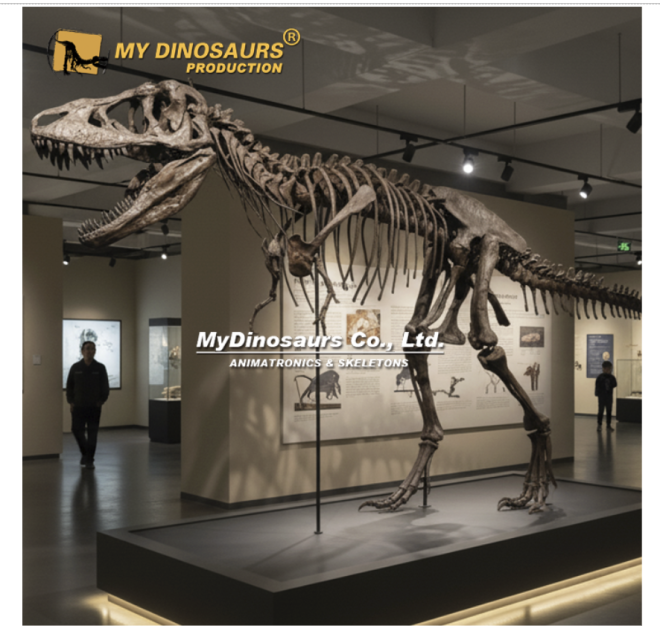
The Process Behind Preparing Dinosaur Skeletons for Museums
Dinosaur skeletons displayed in museums often appear timeless and effortless, standing tall as icons of prehistoric life. Visitors marvel at towering ribs and elongated skulls without realizing the extensive scientific and technical work required to bring these fossils from the ground to public exhibition. Behind every mounted skeleton lies years, and sometimes decades, of excavation, preparation, research, and engineering.
Growing public interest in natural history exhibits has also increased attention around the topic of a full dinosaur skeleton for sale, particularly among museums, educational institutions, and traveling exhibitions seeking accurate replicas or professionally mounted specimens. Understanding how dinosaur skeletons are prepared is essential for appreciating their scientific value, educational role, and long-term preservation. This complex process blends paleontology, anatomy, conservation science, and modern fabrication techniques to ensure that each skeleton tells a credible, informative, and engaging story.
Common Visitor Pain Points in Dinosaur Displays
Before exploring the preparation process, it is helpful to recognize common challenges faced by museum audiences:
- Limited understanding of authenticity: Visitors often struggle to distinguish between original fossils, reconstructed elements, and replicas.
- Lack of context: Skeletons without sufficient interpretation may feel overwhelming or difficult to understand, especially for non-expert audiences.
- Preservation concerns: Poorly prepared or aging displays may appear fragile, incomplete, or outdated.
Effective skeleton preparation addresses all of these concerns while supporting both research and exhibition goals.
Step 1: Fossil Discovery and Documentation
Field Excavation and Mapping
The preparation of any dinosaur skeleton begins at the excavation site. Paleontologists carefully document the fossil’s position, orientation, and surrounding sediment before removal. This contextual information is essential for reconstructing how the dinosaur lived, moved, and was buried.
Key actions during excavation include:
- Photographing fossils in situ
- Creating detailed site maps and diagrams
- Stabilizing fragile bones with protective consolidants
Accurate documentation preserves scientific data long after fossils leave the field.
Transporting Fossils Safely
Once excavated, fossils are encased in protective plaster jackets reinforced with burlap or fiberglass. These jackets shield the bones from vibration, moisture, and impact during transport to laboratories, sometimes across continents.
Step 2: Fossil Cleaning and Stabilization
Removing Surrounding Matrix
In preparation laboratories, technicians remove the surrounding rock matrix using fine tools under microscopes. This step can take months or years, depending on fossil size and fragility.
Common cleaning techniques include:
- Air scribes for controlled vibration
- Dental tools for precision work
- Chemical consolidants to strengthen porous bone
Patience and expertise are critical, as mistakes are irreversible.
Structural Reinforcement
After cleaning, fossils are often reinforced internally using archival materials. Reinforcement prevents cracking and deformation, ensuring fossils remain stable for study or display.
Step 3: Reconstruction and Missing Elements
Addressing Incomplete Specimens
Most dinosaur skeletons are incomplete due to natural decay, erosion, or predation before fossilization. Missing bones are reconstructed using scientific references, CT scans, and comparisons with related species.
These reconstructions allow institutions seeking a full dinosaur skeleton for sale to present anatomically complete displays while maintaining scientific accuracy.
Replica Casting Techniques
High-quality casts are commonly used for missing or fragile bones. Materials such as fiberglass, resin, and reinforced polymers provide durability while preserving fine anatomical detail. Casts also allow original fossils to remain protected in storage or research collections.
Step 4: Mounting for Display and Study
Engineering the Internal Armature
An internal metal framework, known as an armature, supports the skeleton during display. This structure ensures stability while allowing bones to appear natural and lifelike.
Key considerations include:
- Proper weight distribution
- Seismic and structural safety
- Accessibility for inspection and maintenance
Armatures are custom-designed for each skeleton.
Display Poses and Educational Intent
The pose of a mounted skeleton reflects scientific interpretation. Dynamic poses may illustrate motion or behavior, while neutral stances emphasize anatomy and comparative study. Curators carefully balance visual impact with educational clarity.
Step 5: Preparation for Research Use
Scientific Accessibility
Skeletons prepared for study differ slightly from those designed solely for display. Researchers require access to individual bones for measurement, scanning, and analysis.
Research-friendly features include:
- Removable elements
- Detailed labeling systems
- Comprehensive archival documentation
Long-Term Conservation
Environmental controls such as regulated humidity, temperature, and lighting protect skeletons from deterioration. Conservation planning ensures specimens remain usable for decades.
Display vs Study Preparation Comparison
|
Feature |
Display Preparation |
Study Preparation |
|
Visual realism |
High |
Moderate |
|
Structural permanence |
Very high |
Adjustable |
|
Accessibility |
Limited |
High |
|
Educational signage |
Extensive |
Minimal |
This balance allows skeletons to serve both public education and scientific research.
Modern Uses Beyond Museums
Educational Institutions and Exhibitions
Universities, science centers, and traveling exhibitions increasingly seek complete skeleton displays for immersive learning environments. These settings benefit from professionally prepared mounts that combine accuracy with durability.
Institutions evaluating a full dinosaur skeleton for sale often prioritize:
- Anatomical accuracy
- Durable construction materials
- Modular installation options
Professionally prepared skeletons allow institutions to educate without risking irreplaceable original fossils.
Ethical and Scientific Considerations
Accuracy Over Aesthetics
While visual appeal is important, accuracy remains the highest priority. Misrepresenting anatomy or behavior can mislead audiences and undermine educational value.
Transparency With Audiences
Clear labeling helps visitors understand which elements are original fossils and which are replicas or reconstructions. Transparency fosters trust and supports scientific literacy.
Conclusion
Preparing a dinosaur skeleton for display and study is a meticulous process that blends science, craftsmanship, and education. From excavation and laboratory preparation to reconstruction and mounting, each step ensures accuracy, durability, and interpretive value.
As interest grows in acquiring a full dinosaur skeleton for sale, understanding the preparation process helps institutions make informed decisions. Thoughtfully prepared skeletons not only preserve scientific integrity but also inspire curiosity and learning for generations. When executed correctly, these displays become powerful tools for education, research, and meaningful public engagement.