Chemistry experiments make science tangible, but what happens when students don’t have access to a physical lab? This article explores how online chemistry tutors are revolutionizing hands-on learning through innovative methods.
From interactive virtual simulations to everyday household materials, students can develop essential lab skills without traditional equipment. Discover how digital tools and creative teaching approaches are bridging the gap, ensuring that remote learners still experience the excitement of chemistry in action. Whether you're a student struggling with remote learning or a parent wondering if online science education works, these innovative approaches show how chemistry education continues to evolve in the digital age.
The Chemistry Education Challenge
Chemistry is one of the most hands-on subjects in science, with traditional classes centered around laboratory work. In a physical lab, students mix chemicals, observe reactions, and develop essential techniques that bring theoretical concepts to life. However, when learning shifts online, replicating these crucial experiences becomes a challenge.
For many students, chemistry can feel abstract without the ability to witness reactions firsthand or handle real equipment. Measuring chemicals, observing color changes, and conducting experiments transform complex equations into tangible understanding. Without this hands-on component, bridging the gap between theory and real-world application becomes much harder.
Digital Solutions for Chemistry Learning :
The shift toward remote learning has forced educators to rethink how chemistry experiments work. Students need hands-on experience to truly grasp chemistry concepts, so innovative alternatives have emerged to fill this gap.
Many students use additional resources to improve their understanding of difficult topics. With online chemistry tutoring programs, several effective methods are used to teach laboratory skills remotely, combining technology with everyday materials to create meaningful learning experiences.
Benefits of Virtual Chemistry Learning
- Safety comes first - No exposure to potentially harmful chemicals or equipment.
- Try and retry - Students can repeat experiments until they understand concepts.
- Budget-friendly - No expensive specialized equipment needed
- Inclusive learning - Students with physical limitations can fully participate
Technology Tools That Make It Work
Modern video conferencing platforms include features specifically helpful for teaching chemistry remotely. Document cameras and smartphone magnifiers provide close-up views of small-scale reactions happening in real-time.
Multiple camera angles help students observe experiments from different perspectives, often offering better views than they might get in crowded school labs. Screen-sharing capabilities allow tutors to display molecular structures alongside live demonstrations, connecting the visible reaction with its underlying chemical processes.
Measurement and Analysis Tools
Virtual labs incorporate sophisticated data collection systems that automatically generate graphs and analyze results. This technology speeds up the data processing that often consumes valuable lab time in physical settings.
Students learn to use the same scientific software employed by professional chemists for data analysis. The instant compilation of experimental data helps students focus on interpreting results rather than struggling with manual calculations. Many programs also allow students to export their data for further analysis or inclusion in lab reports.
Group Learning Environments
Online chemistry platforms increasingly include collaborative features that let students work together despite physical separation. This social component reinforces learning while developing teamwork skills valued in scientific fields.
Virtual breakout rooms allow small groups to design experiments and analyze results cooperatively. Shared digital workspaces let students draw molecular structures and reaction mechanisms together in real-time. These collaborative opportunities help students verbalize their understanding of chemistry concepts while learning from peers.
Comparing Learning Methods
|
Feature |
Traditional School Lab |
Virtual Lab Simulation |
Home Kitchen Experiments |
|
Equipment Access |
Full laboratory setup |
Computer-generated tools |
Basic household items |
|
Safety Level |
Requires supervision |
Completely safe |
Limited to safe materials |
|
Cost |
School budget dependent |
Software subscription |
Very low cost |
|
Experiment Range |
Comprehensive |
Wide but virtual |
Limited but tangible |
|
Data Collection |
Manual or digital |
Automated and precise |
Basic measurements |
|
Mistake Consequences |
Potential safety issues |
Informative feedback |
Minimal risk |
Future Directions in Chemistry Education
The new teaching methods created for online chemistry education have initiated significant changes in face-to-face classroom procedures. Virtual simulations have become joint educational tools with physical laboratory work at numerous educational facilities.
New emerging technologies will enhance learning experiences in chemistry education during the upcoming years.
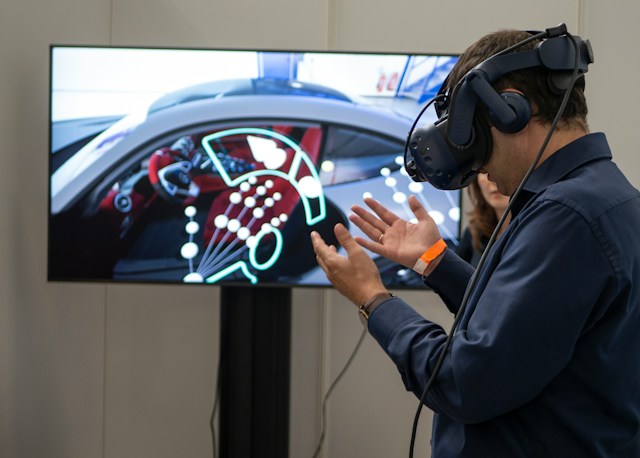
Chemistry education will advance through virtual reality laboratories and augmented reality molecular visualization as well as AI-guided experimentation. The development of new technologies will continue to reduce the existing variance between theoretical knowledge acquisition and actual laboratory practice.
Conclusion
Online chemistry tutors adopted everyday materials together with modern technological resources to deliver laboratory instruction to their students effectively. Through virtual simulations, collaborative digital tools, and kitchen chemistry students now experience real scientific procedures from their remote locations. The approaches provide important alternatives to standard laboratory work but cannot offer the same level of experimental experience.
The skills students acquire through virtual chemistry education produce effective outcomes when students transition to physical laboratories because they access improved safety features and better repeatability and accessibility in the laboratory environment. Technological progress will likely continue to merge virtual and physical chemistry education, which will create progressively better learning chances for students across the world.
Frequently Asked Questions
Do virtual labs prepare students for real laboratory work?
Virtual laboratories provide sufficient instruction to students regarding experimental design, scientific thinking, and data analysis, although they cannot deliver the same quality of hands-on experience. Online practice of lab procedures leads students to acquire better practical skills which they display in physical laboratory settings. Virtual environment skills easily translate into physical world environments without any major difficulties.
How do tutors know if students understand the experiments?
Online chemistry tutors evaluate students' learning through various methods, which involve virtual experimental screen recordings, as well as photographs showing students' done-at-home work, and full-scale report submissions and live tutoring sessions. Virtual technology systems monitor student activity while generating data which enables tutors to find out which aspects students struggle with most.
What about advanced chemistry concepts requiring specialized equipment?
For advanced topics, tutors combine simulations with pre-recorded demonstrations using professional equipment. Students may not physically perform these experiments themselves, but they observe detailed procedures and analyze authentic data. The best tutors break down complex processes into understandable components while maintaining scientific accuracy.