Choosing an off-road motorcycle for a teen involves more than comparing top speed and motor power. Rider height, physical strength, riding experience, and the bike's power control all matter. The right model should fit the rider's physical abilities while providing suitable power, braking, and suspension. For families considering their first off-road motorcycle, confirming that the rider can manage the bike safely should come before comparing performance figures and prices.
What Should a Youth Off-Road Bike Offer?
An electric dirt bike for teen riders should not simply be a smaller version of an adult model. Its design needs to match the rider's physical condition and experience, including seat height, overall weight, wheel size, and power delivery. For teens who are relatively new to off-road riding, being able to stop securely, steer confidently, and operate the brakes is more important than simply having a higher top speed.
Electric power also offers a different riding experience. The motor responds directly to throttle input without requiring the frequent gear changes associated with traditional gas-powered motorcycles. Different riding modes can also help riders adjust power delivery according to their experience. However, electric off-road motorcycles can still produce substantial power, so their weight, speed, and safety requirements should never be overlooked.
How Should Bike Size and Weight Match the Rider?
Height is an important starting point, but age alone cannot determine whether a motorcycle is suitable. Riders should be able to reach the ground comfortably, control the handlebars, and keep the bike stable when stopping. Seat height, frame dimensions, and wheel size all affect handling, while overall weight determines how easily a rider can manage the motorcycle.
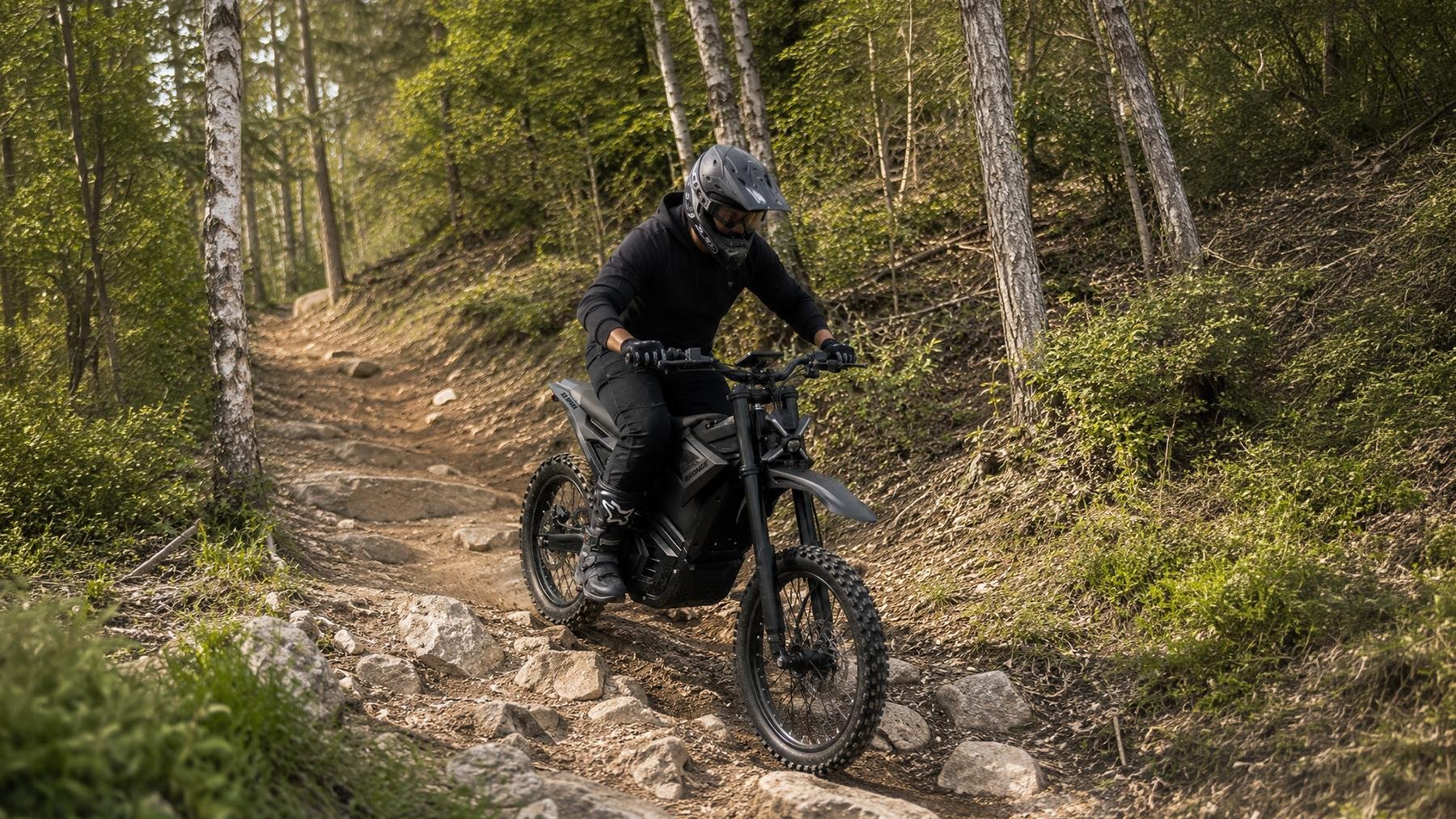
For example, the Qronge X3 Spark is positioned for teen riders with some off-road experience. Its listed rider-height range is 4'7"–6'3", the bike weighs 160 lbs, and its maximum payload capacity is 350 lbs. These figures show why buyers should look beyond the recommended height range and consider whether the rider has the strength and experience to manage the bike, especially during low-speed turns, stops, and challenging terrain.
Why Do Riding Modes Matter More Than Top Speed?
Motor specifications directly influence acceleration and climbing performance, but the ability to manage power is especially important for teen riders. Higher torque provides stronger driving force, but it can also make a motorcycle more demanding to control if the rider cannot manage throttle input smoothly.
The X3 Spark features a 4,500W peak mid-drive motor with a listed torque of 283Nm and three riding modes: ECO, Sport, and Turbo. ECO mode reaches up to 12.5 mph, Sport mode up to 22 mph, and Turbo mode up to 50 mph. Each mode delivers a different level of power, allowing riders to select settings based on their experience and permitted riding conditions. New riders should first become familiar with lower-power settings in an appropriate riding area before gradually learning how the motorcycle accelerates and brakes. Starting with maximum power is not a sensible approach.
How Should Buyers Evaluate Battery Capacity and Range?
Battery capacity determines how much energy a motorcycle can store, while actual range depends on riding speed, terrain, rider weight, and power mode. Buyers should look beyond maximum range and understand how distance changes between riding modes rather than treating ideal-condition figures as guaranteed everyday results.
The X3 Spark uses a 60V 30Ah battery with a nominal energy capacity of 1,800Wh and an advertised maximum range of up to 70 miles under ideal conditions. Its published mode figures also show up to 70 miles in ECO, 40 miles in Sport, and 30 miles in Turbo. These differences illustrate how stronger power output generally requires more energy. For longer off-road sessions, considering the route, expected riding time, and battery reserve needed for the return trip is more useful than relying on maximum range alone.
Why Tires, Suspension, and Brakes Matter
Off-road terrain can include gravel, dirt, uneven surfaces, and slopes, making chassis equipment an important part of the buying decision. Tire dimensions and tread influence traction, suspension helps absorb impacts, and braking performance determines how effectively a rider can control speed.
The X3 Spark uses a 17-inch front wheel and a 14-inch rear wheel, with 150mm of front suspension travel and 75mm of rear suspension travel. It also features a hydraulic braking system. These components work together to influence how the motorcycle handles uneven terrain. For teen riders, parents should also confirm that the bike's weight and braking controls match the rider's abilities and regularly inspect the tires, brakes, and suspension.
Protective Gear and Riding Locations Are Essential
Choosing the right motorcycle is only part of the preparation. Teen riders should wear a properly fitted full-face helmet, goggles, gloves, knee pads, elbow pads, and suitable off-road boots. Initial rides should take place in areas that permit powered off-road motorcycles, with appropriate supervision from an experienced adult.
Before riding, check tire pressure, brake response, battery condition, and fasteners. Different riding venues may have specific age, vehicle, and safety requirements, so these should be confirmed before heading out. Off-road motorcycles should not automatically be treated as suitable for ordinary public roads or bicycle paths.
What Should Buyers Compare During an Electric Dirt Bike Black Friday Sale?
Black Friday provides an opportunity to compare motor specifications, bike dimensions, and promotional prices, but discounts should not be the only factor in the decision. When reviewing an electric dirt bike Black Friday sale, buyers should first confirm that a model matches the rider's height, experience, and intended use before comparing motor output, battery capacity, braking equipment, and after-sales support.
During Black Friday, new Qronge email subscribers can unlock exclusive purchase offers with a total stated value of $1,780. Actual savings depend on the number of qualifying bikes purchased and can reach up to $700.
For teen riders with some off-road experience who want extended range and strong power, the X3 Spark offers a 4,500W peak motor, a 60V 30Ah battery, and three riding modes. Before purchasing, families should still confirm that the rider can manage the bike's 160-lb weight and that it is appropriate for the intended riding area. Choosing a model that matches the rider's physical abilities and experience matters more than simply pursuing the largest discount or highest top speed.