A used touring caravan can be a cost-effective way to enjoy weekends away and longer holidays, but the asking price is only one part of the budget. It is worth thinking about where you will keep it, what it needs before the first trip and how much you are likely to spend each year. Those costs can vary just as much as the caravans themselves.
When comparing used caravans for sale, look beyond the model year and advertised extras. Two similarly priced caravans can have very different first-year costs if one needs new tyres, has limited service records or comes without equipment you would otherwise have to buy. Working through the less obvious expenses makes it easier to recognise genuine value.
Where will you keep it between trips?
Storage can be one of the biggest differences between two owners' annual budgets. If you have suitable space at home, check that the caravan can be moved in and out without difficulty and that access, security and any property restrictions have been considered. The space needs to work for the whole outfit, not just the caravan's length on paper.
If home storage is not an option, get quotes from local caravan storage sites before buying. Ask about access hours, security, whether the pitch is hardstanding, and whether there are additional charges for moving the caravan or changing arrangements. A cheaper site that is awkward to reach might prove inconvenient if you hope to get away regularly.
Security and safe storage are other costs to plan for. Depending on where you keep the caravan, you may need approved locks, an alarm, a tracking device or a more secure storage site. Check the actual cost of these measures rather than relying on another owner's budget.
Allow for servicing and the jobs that cannot wait
A caravan may look tidy inside while still needing attention underneath or around its seals and fittings. Ask for recent service records and damp inspection results, then find out what has been repaired and what remains outstanding. The absence of paperwork is not proof of a problem, but it makes a proper inspection more important.
Budget for routine habitation servicing and appropriate checks of the running gear, brakes and electrical and gas systems. Gas work should be left to someone suitably qualified. On older tourers, pay particular attention to tyres: a caravan can cover very few miles while its tyres continue to age. Look at their condition and date markings, not simply the depth of tread.
It is sensible to keep some money aside for repairs that are difficult to predict. A faulty fridge, worn battery or damaged seal may be manageable individually, but several small jobs together can change the cost of a supposedly inexpensive purchase. Where possible, get written estimates before agreeing to buy.
Don't overlook the equipment that makes it usable
A caravan advertised with an awning or motor mover may appear better value than one without them, but check that the extras are included in the sale and work properly. Equally, there is no need to pay more for accessories you are unlikely to use. A large awning is not much of a benefit if most of your trips will be short weekend stops.
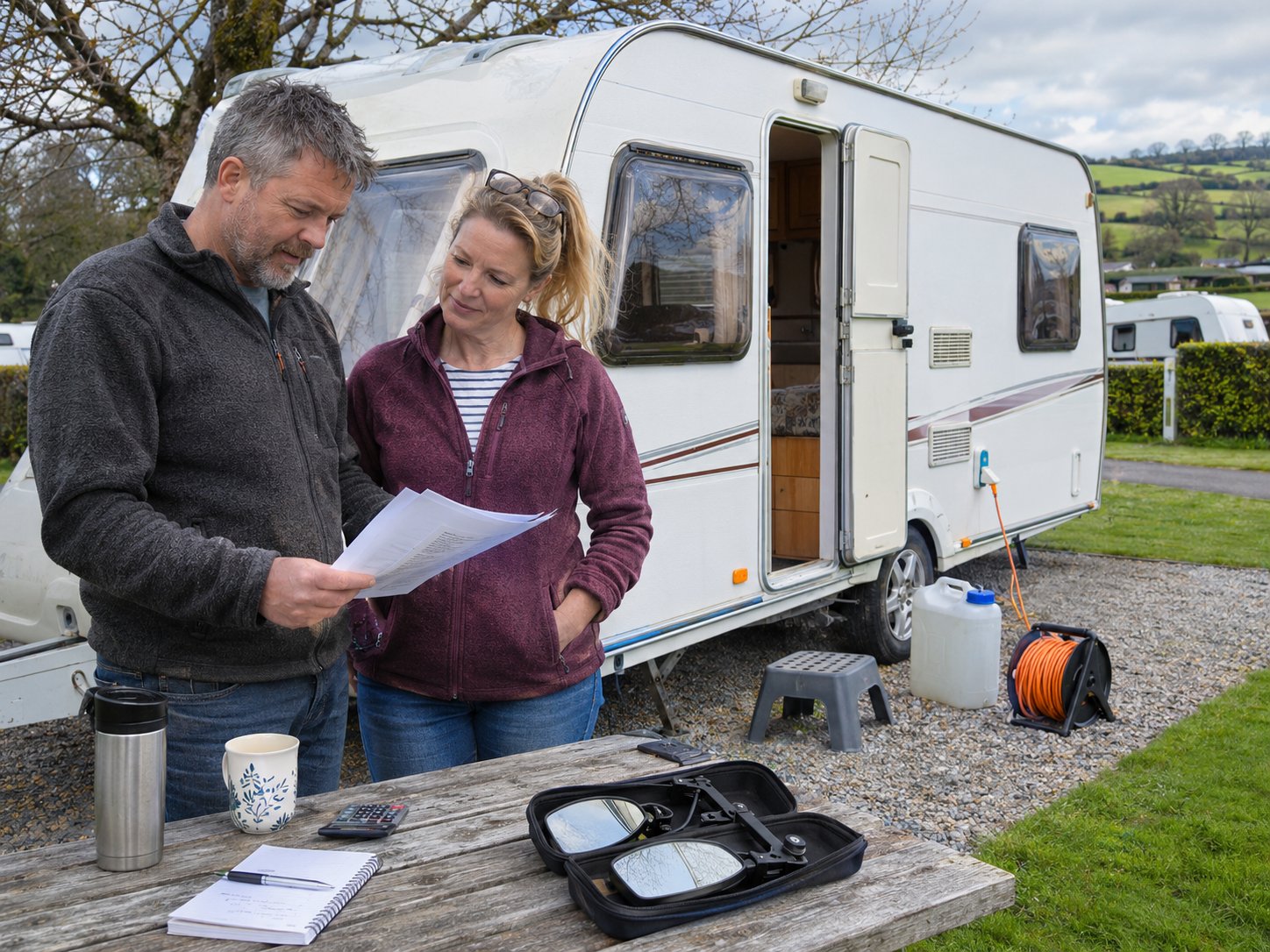
First-time buyers may also need a suitable towbar and electrics, towing mirrors, security equipment, a leisure battery, water containers, an electrical hook-up lead and basic levelling gear. Some caravans come with several of these items; others do not. Make a list of essentials before visiting, then tick off what is included.
Consider the weight of that equipment too. Heavy accessories and belongings use part of the caravan's permitted payload, so storage space alone does not determine how much you can safely carry. Check the manufacturer's weight figures for the specific model rather than relying on its size or berth count.
Build a realistic first-year budget
Divide your costs into four groups: the purchase and any immediate repairs; one-off equipment; recurring expenses such as storage, security and servicing; and the costs of actually travelling, including site fees and fuel. Add a contingency for unexpected work. This gives you a more useful figure than the asking price alone.
Think about how often you expect to use the caravan. Someone taking frequent short breaks close to home may have a different spending pattern from a family booking several longer trips. Where possible, plan for a cash purchase. If you consider a payment arrangement, check that its terms are transparent and free from interest or other prohibited charges before committing.
Before committing, confirm that your tow car is suitable and that you have the right driving entitlement. The rules on towing with a car are a useful starting point, but you must also check the vehicle manufacturer's towing limits and the loaded weights of the outfit.
Once you have actual quotes for the main expenses, compare your shortlisted caravans on the same basis. The one with the lowest price on the windscreen may not be the one that costs least to enjoy over the first year.