

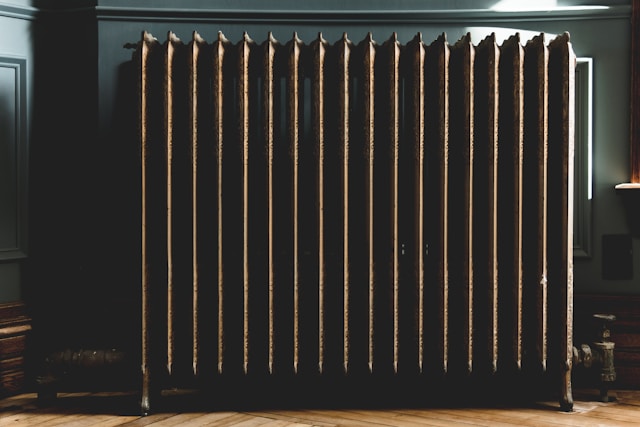
A heating system that has sat idle since spring tends to show its faults the first time it is asked to work properly, which is also when engineers are busiest. Pumps can stick after a summer standing still, radiator valves seize, and the pressure in a sealed system drifts down without anyone noticing. A run-through on a dry autumn afternoon, with the programmer overridden and every radiator turned up, finds most of these problems while there is still time to deal with them.
Start with the pressure gauge
Most modern systems are sealed, with a pressure gauge on the front of the boiler or just below it. The boiler's manual gives the right reading for a cold system, and many gauges mark that range with a shaded zone. If the needle has fallen below it, the boiler may refuse to fire, and the usual fix is a top-up through the filling loop, the braided hose or built-in lever beneath the boiler that lets mains water into the system.
Open the filling valves slowly, watch the needle rise into the right zone, then close them firmly. An occasional top-up is normal. A system that keeps needing one is losing water somewhere, perhaps from a weeping valve, a joint under the floor or the relief pipe that runs out through the wall, and that calls for an engineer.
Older open-vented systems have no gauge at all. They are fed from a small tank in the loft, which should hold some water and have a float valve that moves freely.
Bleed the radiators that need it
Air collects at the highest point of a radiator, so one with a cool top edge and a warm lower half needs bleeding. Switch the heating off and let the radiators cool, then fit a radiator key to the small square valve at the top corner and open it slowly with a cloth held underneath. Air hisses out first, and the moment water follows, close the valve again.
Letting air out of a sealed system lowers its pressure, so check the gauge once all the radiators are done and top up if it has dropped. A radiator whose bottom half stays cold has a different problem, usually sludge, and bleeding will not touch it.
Free the valves and check the controls
Thermostatic radiator valves, the numbered heads on most radiators, can stick after a summer turned down low. Turn each one fully up and back down a few times. If a radiator still stays cold, unscrew the head and look at the pin underneath, which can often be freed by working it gently until it springs back up. Leave the lockshield valve at the other end alone, because it is set to balance the flow between radiators.
Then check the controls. Make sure the programmer shows the right time, particularly after a power cut or the clocks changing, and that the room thermostat is not sitting beside a radiator or in a draught where it will give a false reading. A wireless thermostat with flat batteries can leave the boiler waiting for a signal that never comes.
Faults that need an engineer
Some findings are beyond a homeowner's fix. A pump that hums without moving any water, radiators that remain cold whatever the valves are set to and a boiler that keeps locking out all need a qualified engineer. So do sooty marks on or around the boiler, or a flame that looks lazy and yellow, and in that case the boiler should be switched off until it has been checked.
A homeowner who rings central heating engineers in Brentwood with notes from the run-through will usually get to the fault faster than one who reports that the heating has stopped. Note which radiators stayed cold, what the gauge read before and after topping up, and whether the pump could be heard running.
When repair turns into replacement
The boiler is a separate decision. Elsewhere in the system, repair usually makes sense until the same problems keep coming back: a pump or a motorised valve can be replaced on its own, and a radiator that has rusted through is a straightforward swap.
The sums change when several parts fail in the same winter, when radiators all over the house are corroded, or when the house itself has changed. An extension, a loft conversion or two rooms knocked into one can leave the old pipework and radiators badly matched to the spaces they now heat. That is the time to get a price for reworking the system, or for new radiators and controls, to set against the repair bill. If floors are coming up anyway, ask about underfloor heating at the same time.
Pipes that can freeze
A hard frost finds out the pipes that run through cold spaces such as the loft, an unheated garage or the void under a suspended floor. Foam lagging from a builders' merchant is cheap and quick to fit, and a far easier job now than in a freezing loft by torchlight.
Condensing boilers have one more weak point: the plastic condensate pipe that carries waste water from the boiler to a drain. Where it runs outside it can freeze, and the boiler then stops and shows a fault. Pouring warm water from a kettle along the pipe usually thaws it, and lagging the outside run makes a repeat less likely.