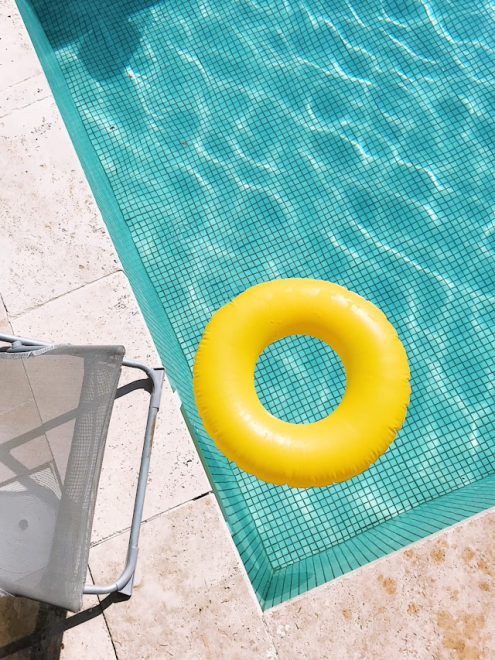
A strand of glowing bulbs stretching across a swimming pool looks inviting in photographs. Reflections ripple across the water, the pool deck feels like a resort courtyard, and the lights appear to float overhead. The picture rarely shows what happens when a bulb needs replacing, a support comes loose, or someone wants to clean the fixture above the deep end.
Those practical details are central to the question of whether outdoor string lights belong over swimming water. Products that are safe for a garden pergola are not automatically suitable above a pool. The area around a swimming pool is subject to special electrical requirements because water, wet surfaces, and people create a much higher consequence for faulty equipment.
For a homeowner drawn to this look, Astoria Lighting Co may enter the conversation as a source of ideas for exterior illumination, but the first decision must be about safe placement rather than the style of bulb. A qualified electrician familiar with swimming-pool installations should establish which locations and equipment meet the applicable rules before a decorative layout is considered.
Why the Space Above Water Is Different From an Ordinary Patio
Suspended lights over a dining table have relatively predictable surroundings. People can move furniture to reach the installation, and a fallen item generally lands on a hard surface. Above a swimming pool, maintenance becomes more difficult and failure can put electrical components into the water.
A loose socket, damaged cord, or falling fixture presents a hazard that cannot be judged by appearance alone. Even when a string is not in direct contact with the water, it may be exposed to splashing, chemicals, humidity, and movement at its support points. Electrical shock is a particularly serious concern around pools.
An outdoor rating does not mean pool approval
A product label describing weather resistance tells you something about environmental exposure. It does not by itself establish that the item is permitted in every location around a pool. Swimming-pool electrical rules can impose restrictions on overhead wiring, luminaires, receptacles, protective equipment, and clearances. The applicable requirements depend on the jurisdiction and installation conditions.
Do not assume that a low-voltage product, plastic bulb, waterproof connector, or ground-fault protective device makes a prohibited location acceptable. Each of those features addresses only part of the risk. The complete installation must be evaluated together.
The Most Difficult Question Is Often Where the Strand Could Fall
A lighting plan usually focuses on where the bulbs will hang. A safety review also considers where the fixtures and wiring could end up if a support fails. A cord suspended above a pool could drop into the water, while a strand beside the pool might still extend over the swimming area when it sags or moves.
The anchors require scrutiny as well. Decorative posts, fencing, and pergola trim may not be designed to carry the loads imposed by suspended lighting. Wind and repeated movement can increase stress at connections. A visually neat installation is no substitute for support points that are suitable for the intended loads.
This is one reason homeowners should not copy a social-media photograph and recreate the layout with store-bought hooks. The image gives no reliable information about the product approval, electrical design, anchoring, or inspection behind the scene.
Maintenance Should Be Possible Without Working Above the Pool
Imagine a lamp failing near the center of the span. Reaching it may require a ladder in an awkward position, equipment placed near the pool edge, or an attempt to pull the strand toward the deck. None is a sound maintenance plan.
For outdoor string lights, a sensible maintenance plan accounts for bulb replacement, cleaning, inspection, and eventual removal before installation begins. Equipment that is difficult to reach tends to encourage shortcuts. Around a pool, those shortcuts can be especially dangerous.
Keep repairs out of the water and off improvised supports
Never attempt to retrieve or adjust electrical lighting that has fallen into a pool while people remain in the water. Keep swimmers away, do not touch the equipment or water, and have power isolated safely by an appropriate qualified person before recovery or repair. Do not assume that merely switching off a decorative lighting controller eliminates all electrical hazards.
Even routine work should be planned for safe access. An installation that demands standing on a pool cover, leaning a ladder across the water, or stretching over the edge to reach a connector is poorly suited to everyday ownership.
Create the Overhead Feeling Without Crossing the Water
The desired atmosphere is often achievable without hanging anything directly above the pool. Lighting along a nearby pergola, on a separate seating terrace, or around the outer perimeter can frame the water visually. Reflections from those sources may still add sparkle to the pool surface, especially when the fixtures are positioned with care.
A short run above a table away from the swimming area can define a gathering space. Light washing a garden wall can add depth behind the pool. Discreet illumination near steps and walking routes can help people move through the area, provided it is designed to avoid glare and comply with pool-area rules.
Where a homeowner has seen an overhead arrangement they like, Astoria Lighting Co could be shown the photograph together with a marked plan of the pool and surrounding structures. The productive question is which visual effect is worth preserving, not how to duplicate every suspended cable in the image.
Use the water as a reflective surface, not a mounting zone
A pool naturally catches and moves reflected light. Fixtures do not have to be directly overhead for their colors to appear on the surface. The effect will change with viewing angle, water movement, and brightness, so it is worth assessing the scene after dark rather than relying entirely on a daytime sketch.
Avoid pointing intensely bright fixtures toward swimmers' eyes or creating reflections that obscure steps and edges. Attractive lighting should not make it harder to judge where the deck ends and the water begins.
Questions That Belong in the Design Review
Before buying lamps or approving attachment points, clarify whether the proposed placement falls within a restricted pool zone. Ask who will check applicable electrical requirements, whether the equipment is approved for that location, and how it will be supported and serviced. The answer may be that the proposed overhead arrangement should not be installed.
It also helps to consider changes in how the pool is used. A summer gathering may involve umbrellas, inflatables, pool-cleaning poles, or temporary furniture. A light that appears well clear of normal activity can become an obstruction when long equipment is carried across the deck.
When discussing possible alternatives with Astoria Lighting Co, identify the parts of the yard where people actually gather after swimming. That often moves the design toward dining, conversation, and walking areas, where the lighting has a clear purpose and can be planned within the applicable safety requirements.
Know When to Reject the Original Idea
Some design concepts should remain inspiration rather than construction instructions. If a proposed strand would run over the water and cannot be shown to comply with the applicable electrical rules and manufacturer's instructions, do not install it. A different support cable, heavier hook, or added waterproof cover does not resolve a fundamental placement problem.
Likewise, do not rely on a contractor's casual assurance that the system is safe because they have installed similar displays elsewhere. Ask for a design that can be reviewed against the relevant requirements by a properly qualified professional. The consequences of getting this wrong are too serious to treat the rules as optional details.
Keep the Atmosphere Without Adding an Avoidable Hazard
The appeal of outdoor string lights beside a pool is easy to understand: warm points of light can make the surrounding deck feel comfortable and inviting. The case for suspending them directly over swimming water is much less straightforward. Electrical restrictions, falling equipment, wet conditions, and difficult maintenance all deserve priority over the appearance of a photograph.
That welcoming nighttime effect can still be achieved through thoughtfully positioned fixtures on suitable surrounding structures, which is the kind of alternative worth raising with Astoria Lighting Co. The strongest design is one people can enjoy without wondering what might happen if a bulb, wire, or attachment fails above the water.