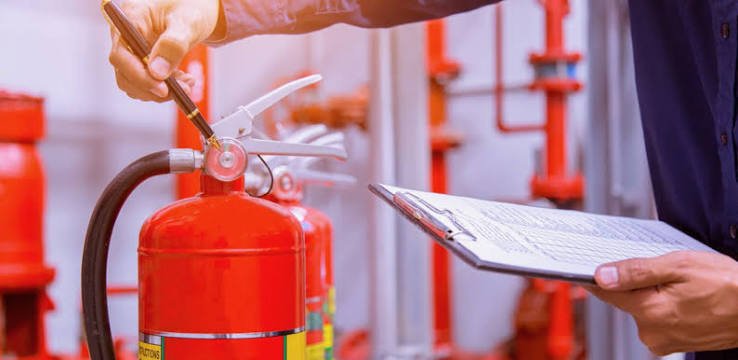
Fire safety is one of the most important responsibilities for landlords, business owners and property managers. A damaged fire door, blocked escape route or faulty alarm system can put people at serious risk during an emergency. Many of these problems can be identified and addressed before a fire occurs.
A fire risk assessment helps property owners understand the potential fire hazards within a building and determine what precautions are needed to protect occupants.
It is not simply about completing paperwork. A suitable assessment considers how the building is used, who may be at risk and whether existing fire safety measures are appropriate.
In England, fire risk assessments are legally required for most non-domestic premises and relevant parts of residential buildings containing two or more separate dwellings.
This guide explains what a fire risk assessment involves, who is responsible, how much it costs, and what landlords and businesses need to know about UK fire safety requirements.
What Is a Fire Risk Assessment?
A fire risk assessment, often shortened to FRA, is a structured examination of a building to identify fire hazards, evaluate risks and determine the fire safety measures needed to protect people.
The assessment considers how a fire might start, how it could spread and whether occupants could escape safely.
A professional fire safety risk assessment may include checking:
- Fire hazards and potential ignition sources.
- Emergency escape routes and final exits.
- Fire doors and their condition.
- Fire detection and alarm systems.
- Emergency lighting and safety signs.
- Fire extinguishers and firefighting equipment.
- Fire compartmentation and visible fire stopping.
- Storage of combustible materials.
- Fire safety procedures and maintenance records.
- People who may need additional help during evacuation.
The findings are recorded in a fire risk assessment report, which explains any identified concerns and recommends actions to improve safety.
Property owners looking for fire risk assessment services in London can explore the inspections and reporting services provided by Safety Spectrum London for different types of buildings.
Why Is a Fire Risk Assessment Important?
A fire can spread rapidly when suitable precautions are missing or poorly maintained. Even small defects can become serious problems during an emergency.
For example, a fire door that does not close properly may allow smoke to spread into a protected escape route. Similarly, stored items in a communal corridor may obstruct residents trying to leave the building.
A fire risk assessment helps identify these concerns and determine what action is necessary.
The main benefits include:
- Identifying potential fire hazards before an incident occurs.
- Protecting residents, employees and visitors.
- Reviewing the condition of fire safety equipment.
- Supporting compliance with applicable fire safety legislation.
- Helping property managers prioritise maintenance.
- Improving emergency planning and evacuation arrangements.
- Providing a written record of fire safety findings.
The assessment is most useful when its recommendations lead to practical action.
Is a Fire Risk Assessment a Legal Requirement in the UK?
Fire risk assessments are a legal requirement for many types of buildings. However, the legislation differs between England, Wales, Scotland and Northern Ireland.
In England and Wales, the Regulatory Reform (Fire Safety) Order 2005 requires a suitable and sufficient fire risk assessment for premises within its scope.
These generally include:
- Offices and workplaces.
- Shops and retail premises.
- Restaurants, cafés and hospitality venues.
- Hotels and guest accommodation.
- Warehouses and industrial buildings.
- Relevant communal areas of residential blocks.
- Shared areas of houses in multiple occupations.
- Other covered non-domestic premises.
The Fire Safety Act 2021 clarified that the Fire Safety Order also covers the structure, external walls and flat entrance doors of buildings containing two or more sets of domestic premises.
In addition, changes introduced through Section 156 of the Building Safety Act 2022 require Responsible Persons to record their fire risk assessments in full, including the findings and relevant fire safety arrangements.
The official GOV.UK guide to fire safety responsibilities explains these duties and the requirements for maintaining fire safety.
Who Is Responsible for Completing a Fire Risk Assessment?
Under the Fire Safety Order, the duty to ensure a suitable fire risk assessment is completed belongs to the Responsible Person.
The Responsible Person may be an employer, building owner, landlord or another person with control of the premises.
Responsibility depends on how the building is occupied and managed.
Landlords and Freeholders
Landlords and freeholders may be responsible for fire safety in communal areas and other relevant parts of residential buildings.
This commonly applies to blocks of flats, converted buildings and shared accommodation.
Business Owners and Employers
Employers and business operators are generally responsible for managing fire safety in workplaces under their control.
This includes considering employees, customers, visitors and contractors.
Managing Agents and Property Managers
Managing agents may have responsibilities where they control relevant building management arrangements.
They may organise inspections, oversee maintenance and help ensure recommended actions are completed.
Shared Responsibilities
Some buildings have more than one Responsible Person.
For example, a commercial landlord may control shared staircases while individual businesses manage their own premises.
Where responsibilities overlap, the relevant parties must cooperate and coordinate fire safety arrangements.
A professional fire risk assessor can be appointed to complete the assessment, but legal responsibility for fire safety remains with the Responsible Person.
What Happens During a Professional Fire Risk Assessment?
A professional assessment usually follows a structured process.
The assessor examines the property, considers the occupants and evaluates the existing fire safety measures.
1. Identifying Fire Hazards
The assessor identifies potential sources of ignition, combustible materials and other factors that could contribute to fire.
These may include electrical equipment, heating systems, cooking appliances, waste storage and hazardous working practices.
2. Identifying People at Risk
The assessment considers everyone who could be affected by a fire.
This includes residents, employees, visitors, contractors and people who may require assistance during evacuation.
3. Reviewing Fire Safety Measures
The assessor examines relevant safety arrangements, such as:
- Escape routes and exits.
- Fire doors and visible compartmentation.
- Fire alarm and detection systems.
- Emergency lighting.
- Safety signs.
- Fire extinguishers.
- Evacuation procedures.
- Fire safety maintenance records.
The exact inspection scope depends on the building and its use.
4. Evaluating Risks
The assessor considers the likelihood and potential consequences of fire.
If the existing precautions are inadequate, improvements are recommended.
These could include repairing fire doors, improving detection arrangements or removing obstructions from escape routes.
5. Preparing the Fire Risk Assessment Report
After the inspection, the assessor prepares a written report.
The report records the assessment findings and recommends action where necessary.
A useful report should explain the concerns clearly, helping the Responsible Person understand what needs immediate attention and what can be addressed through planned improvements.
Residential Fire Risk Assessment for Flats and Landlords
Residential buildings can present different fire safety challenges depending on their design, age and occupancy.
Purpose-built blocks, converted houses, HMOs and mixed-use buildings may have shared staircases, communal corridors and different fire protection arrangements.
A residential fire risk assessment examines the relevant fire risks and precautions within the building.
For blocks of flats, the assessment generally focuses on the common parts and also considers relevant building elements, including the structure, external walls and flat entrance doors.
Typical considerations include:
- Communal escape routes.
- Flat entrance fire doors.
- Staircases and corridors.
- Fire compartmentation.
- Emergency lighting where required.
- Appropriate detection and warning arrangements.
- Fire safety management procedures.
- Residents who may need additional assistance.
A standard Type 1 assessment is normally non-destructive and does not involve a full inspection of every individual flat.
Where hidden defects or more complex fire safety concerns are suspected, further investigation may be recommended.
Safety Spectrum London provides residential fire risk assessment services in London for landlords, freeholders, managing agents and residential property owners.
Their assessments can help identify fire safety concerns in communal areas and provide practical recommendations for managing those risks.
Fire Risk Assessment for HMOs and Rental Properties
Houses in multiple occupation often have several residents sharing kitchens, hallways, staircases and other facilities.
These arrangements can create additional fire safety considerations.
An HMO fire risk assessment may examine:
- Escape routes and protected stairways.
- Fire detection and warning systems.
- Fire doors and self-closing devices.
- Emergency lighting where appropriate.
- Shared kitchens and cooking hazards.
- Combustible material storage.
- Fire safety management arrangements.
The exact requirements depend on the property's layout, occupancy and applicable fire safety and housing legislation.
A single-family rented house does not necessarily have the same fire risk assessment obligations as a licensed HMO or a converted block of flats.
Landlords should identify which rules apply to their property and ensure the necessary precautions are in place.
Commercial Fire Risk Assessment for Businesses
Commercial properties can contain a wide range of fire hazards.
An office may have electrical equipment and shared escape routes, while a restaurant may have commercial cooking appliances, extraction systems and combustible materials.
Warehouses and industrial buildings may involve additional risks from stored goods, machinery or business operations.
A commercial fire risk assessment considers the actual activities taking place within the premises.
The assessor may examine:
- Fire hazards associated with business activities.
- Building occupancy and people at risk.
- Emergency escape routes.
- Fire detection and alarm systems.
- Fire doors and compartmentation.
- Emergency lighting and signage.
- Fire extinguishers and firefighting equipment.
- Staff training and evacuation arrangements.
- Inspection and maintenance records.
The findings help business owners understand the fire precautions required for their premises.
Businesses needing a commercial fire risk assessment in London can contact Safety Spectrum London to discuss their building type, number of floors and assessment requirements.
How Much Does a Fire Risk Assessment Cost in London?
The cost of a fire risk assessment depends on several factors.
These include the building size, number of floors, layout, occupancy and complexity of the assessment.
A small residential property may require less inspection time than a large commercial building with multiple departments, complex escape routes and extensive fire safety systems.
Safety Spectrum London advertises fire risk assessment services starting from £79 for qualifying smaller residential premises.
Its published service pages also provide the following indicative prices:
Advertised price
Studio / 1-bedroom property
From £79
1–3 bedroom residential property
From £135
4–6 bedroom residential property
From £169
Communal area only
From £140
Larger commercial premises
Quotation based on scope
Prices should be confirmed before booking because property details, inspection requirements and additional services can affect the final cost.
When comparing fire risk assessment prices, property owners should check whether the quotation includes the site visit, written report, photographs where appropriate and a clear action plan.
Fire safety repairs and remedial works are generally charged separately.
The cheapest quote may not always provide the most suitable assessment for a complex building.
What Is Included in a Fire Risk Assessment Report?
A fire risk assessment report is an important document because it records what was inspected, what was found and what action is required.
A professional report may include:
- Property details and building use.
- Assessment scope and limitations.
- Identified fire hazards.
- Details of people at risk.
- Existing fire safety arrangements.
- Fire door and escape route observations.
- Fire alarm and emergency lighting findings.
- Relevant fire safety management information.
- Recommendations for reducing risks.
- A prioritised action plan.
- Review recommendations.
Relevant photographs may also be included to help identify particular concerns.
A detailed report allows the Responsible Person to plan necessary improvements and maintain records of fire safety decisions.
Is a Fire Risk Assessment Certificate Required?
The term fire risk assessment certificate is often used when property owners need evidence that an inspection has been completed.
However, there is no universal government-issued fire risk assessment certificate under the Fire Safety Order.
The essential document is the recorded fire risk assessment and its findings.
Some providers may also issue a certificate or confirmation document, but this does not replace the detailed assessment report.
How Often Should a Fire Risk Assessment Be Reviewed?
A fire risk assessment must remain suitable and up to date.
There is no single statutory expiry period that applies to every building.
The Responsible Person must review the assessment regularly and update it when circumstances change.
A review may be necessary after:
- Significant building alterations.
- Changes to occupancy.
- Changes to escape routes.
- Installation of new equipment.
- Changes to business activities.
- A fire incident or significant near miss.
- Identification of new fire hazards.
Annual reviews are commonly used as a fire safety management practice, but the suitable interval depends on the building and its risks.
A review does not always require a completely new assessment. The important requirement is that the recorded findings continue to reflect the premises.
What Happens If a Fire Risk Assessment Identifies Problems?
A fire risk assessment may identify issues such as damaged fire doors, inadequate escape arrangements or poorly maintained fire safety equipment.
The Responsible Person should review the findings and arrange suitable corrective action.
Some problems may need immediate attention, particularly where there is a serious danger to occupants.
Other improvements may be planned according to their priority and the level of risk.
Common remedial actions may include:
- Repairing or adjusting fire doors.
- Replacing faulty door closers.
- Improving smoke seals or intumescent strips.
- Addressing suitable fire detection requirements.
- Repairing emergency lighting.
- Improving fire safety signage.
- Removing obstructions from escape routes.
- Addressing visible compartmentation defects.
Where specialist work is required, competent contractors should be appointed.
Records of completed repairs should be retained with the fire risk assessment.
This helps demonstrate how identified risks have been addressed.
Choosing a Competent Fire Risk Assessment Provider
A fire risk assessment should be carried out by someone with sufficient knowledge and competence for the premises being assessed.
The assessor needs to understand fire hazards, building layouts, escape arrangements, fire protection measures and relevant legislation.
Before choosing a provider, property owners should consider:
- Relevant fire risk assessment qualifications.
- Experience assessing similar property types.
- Understanding of UK fire safety requirements.
- Appropriate professional insurance.
- Clear assessment scope.
- The quality of written reporting.
- Practical recommendations.
- Relevant professional registration or certification.
Safety Spectrum London advertises professional fire risk assessment services for residential, communal, HMO and commercial properties.
Its service information focuses on written reports, identified risks and prioritised recommendations.
Customers should always confirm the individual assessor's relevant qualifications, experience and competence for their particular building.
Fire Risk Assessment Services Across London
Different types of London properties can present different fire safety considerations.
Older converted buildings may have shared staircases, historic layouts and concerns relating to fire separation.
Modern apartment blocks may include protected corridors, smoke control arrangements and specific evacuation strategies.
Commercial premises may have additional risks associated with business operations, storage or occupancy.
Safety Spectrum London provides fire risk assessment services throughout Central, North, South, East and West London, with selected coverage around the M25.
The company supports landlords, freeholders, managing agents, homeowners where relevant, and business operators seeking fire safety inspections.
Its services include residential fire risk assessments, commercial assessments, HMO assessments and fire safety remedial support.
For property owners searching for a fire risk assessment near me, it is important to select a provider that understands the building type and can clearly explain the inspection scope.
Frequently Asked Questions About Fire Risk Assessments
Who is responsible for completing a fire risk assessment?
The Responsible Person must ensure that a suitable and sufficient fire risk assessment is completed. This may be an employer, landlord, freeholder, building owner or another person with control of the premises.
Is a fire risk assessment a legal requirement?
Yes, for premises covered by the relevant fire safety legislation. In England, the Fire Safety Order applies to most non-domestic premises and relevant parts of multi-occupied residential buildings.
Do landlords need a fire risk assessment?
Landlords may need a fire risk assessment depending on their property type and control of the premises. Blocks of flats, HMOs and buildings with communal areas commonly fall within relevant fire safety requirements.
Is a fire risk assessment required for flats?
The Fire Safety Order generally applies to the common parts and relevant building elements of buildings containing two or more sets of domestic premises. Individual flat interiors are not normally inspected as part of a standard Type 1 communal assessment.
How much does a fire risk assessment cost?
Costs depend on property size, number of floors, occupancy and complexity. Safety Spectrum London advertises qualifying smaller residential assessments from £79, with other property types priced according to scope.
How long does a fire risk assessment take?
A small premises assessment may take around one or two hours, while larger or more complex buildings may require several hours. The duration depends on the scope and property conditions.
How often should a fire risk assessment be completed?
There is no universal fixed expiry date. The assessment must be reviewed regularly and updated when changes or new risks make this necessary.
Can a landlord carry out their own fire risk assessment?
A Responsible Person may carry out an assessment if they have sufficient competence. For more complex premises, appointing a competent professional assessor is often more appropriate.
Does a fire risk assessment include fire door inspections?
Relevant fire doors are normally considered during the assessment. However, a detailed specialist fire door inspection may be needed separately, depending on the findings and building requirements.
What happens if a building fails a fire risk assessment?
A fire risk assessment is not generally a simple pass-or-fail exercise. It identifies risks and recommends action. Serious deficiencies must be addressed, and immediate dangers may require urgent protective measures.
Final Thoughts
A fire risk assessment is an important part of protecting occupants and managing fire safety responsibilities.
It helps identify potential hazards, assess existing precautions and establish practical steps to reduce fire risks.
For landlords and managing agents, fire risk assessments are particularly important in blocks of flats, HMOs and shared residential buildings.
For businesses, they support workplace safety and help those responsible meet their legal duties.
The most effective approach is to arrange a suitable assessment, understand the findings and act on the recommended improvements.
Property owners looking for professional fire risk assessment services in London can contact Safety Spectrum London to discuss their property, request a quotation and arrange an inspection.
Contact Safety Spectrum London
Safety Spectrum London provides fire risk assessment and property compliance services for residential and commercial premises across London.
Office address: Siu Offices, Unit A1231, 4–6 Greatorex Street, London, E1 5NF
Telephone: +44 20 4628 6504
Email: info@safetyspectrumlondon.co.uk
Customers can contact Safety Spectrum London to request a fire risk assessment quote, discuss legal requirements or arrange a professional inspection.