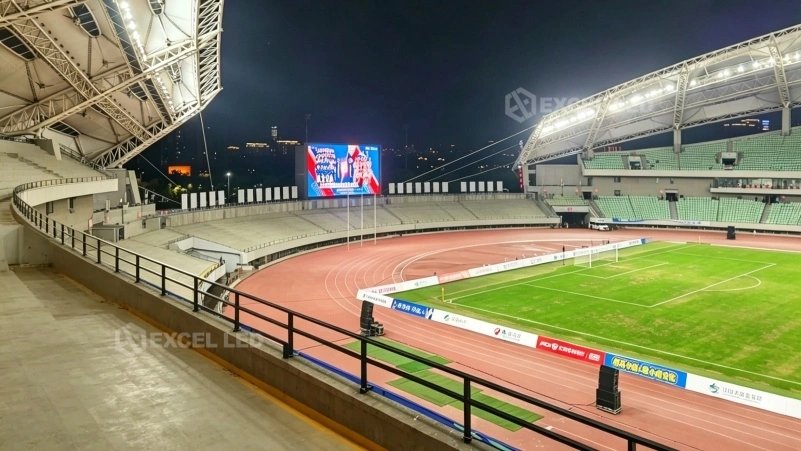
LED screens are now a crucial component of digital advertising, entertainment venues, corporate communication, retail, and public information systems. But choosing a screen is not as simple as comparing price or display specs. The quality of manufacturing, customisation, technical support, and installation requirements all impact the result. The right selection of the manufacturer supports the display performance to meet the project's goals, environmental requirements, and operational requirements. Knowing these can help in the assessment of suppliers, whilst avoiding unnecessary costs, and choosing an LED display solution that can provide reliable performance over the expected lifespan.
1. Define Your Project Requirements Before Comparing Manufacturers
Each LED display project starts with certain demands for the function. The technical requirements for an advertising billboard are different than those for a conference room video wall or a temporary concert screen. Thus, before getting in touch with the manufacturers, determine the purpose, location, viewing distance, screen size, and length of use of the display.
Think about how the display will be used, whether indoors or outdoors or for a temporary event. Outdoor installations must be protected from the weather and have good visibility from the sun, and indoor installations often give more consideration to image details and ease of viewing. Quick-lock and lightweight cabinets are great for rental screens. Clear requirements can make manufacturers recommend configurations instead of unnecessary specifications.
2. Evaluate Manufacturing Capabilities and Product Range
Manufacturer's production capabilities impact customization, quality consistency, and delivery planning. Producers who already have manufacturing facilities can provide more information on the manufacturing process, the choice of components, the assembly process, and inspection standards. Analyzing these capabilities can help differentiate direct manufacturers from companies that are resellers. A wide range of display products is also important if projects involve special display formats. There are different functions of indoor, outdoor, rental, stadium, COB, and LED poster displays. If the manufacturer has several categories, they may be able to be more flexible in the event of a change to the technical requirements or the need to use multiple displays in a single project. But product diversity should complement – not substitute for – thoughtful technical assessment.
3. Choose an LED Display Manufacturer With Suitable Technical Expertise
Technical knowledge is the key to deciding if a display configuration is a good fit for its intended environment. A good LED Display Manufacturer will be able to describe the pixel pitch, brightness, refresh rate, cabinet design, power consumption, and maintenance access in real terms. These specifications help determine the clarity of images, efficiency in operation, complexity in installation, and usability.

It is important to note that pixel pitch refers to the distance between two adjacent LED pixels. The smaller the pixel size, the smaller the pitch, the clearer the picture at closer angles, but it may be more expensive. Brightness also needs to match up to ambient lighting, without causing uncomfortable viewing. Refresh rate and grayscale performance are other factors to consider when using cameras. Challenge manufacturers with regard to their advice to the extent that it is not linked to measurable project needs.
4. Examine Quality Control and Product Reliability
Reliable displays depend on consistent components, controlled assembly, and thorough testing. A manufacturer's quality procedures should cover LED modules, power supplies, receiving cards, cabinet construction, wiring, and final system performance. Ask which inspections occur during production and whether completed screens undergo operational testing before shipment.
Important Quality Indicators
- Factory capabilities: In-house production lines can provide greater manufacturing visibility.
- Quality management: ISO 9001 certification indicates a documented quality management system, not automatic product perfection.
- Product compliance: Verify CE, UL, FCC, or RoHS documentation against applicable products and market requirements.
- Aging tests: Extended operation testing can help reveal certain component or assembly problems.
- Warranty documentation: Confirm coverage periods, exclusions, replacement procedures, and support responsibilities.
EXCEL LED, for example, operates a 13,000-square-meter factory with in-house production lines and a 72-hour aging test facility. These details offer useful reference points when assessing manufacturing infrastructure. Independent documentation and product-specific evidence remain important when comparing suppliers.
5. Compare Customization Options and Installation Requirements
While typical display cabinets can be appropriate for simple installations, architectural work can necessitate personalized dimensions, mounting systems, or cabinet setups. Find out if the manufacturer will offer OEM and ODM services, custom branding, unique screen shapes, and compatibility with existing control systems. The same can be said about installation requirements. Structural assessments, appropriate power distribution, ventilation, signal routing, and safe access for maintenance may be required for large displays. Installations that are curved and outdoors add engineering considerations. Get a conversation going about mounting and site conditions early to ensure that production does not start without potential problems being identified. EXCEL LED offers customization options for screen sizes and cabinet constructions, as well as installation guidance. These can be applicable in situations where a project needs to be designed, made, and delivered as a coordinated project instead of ordering off-the-shelf panels separately. Always ask for drawings and technical specifications for approval prior to production.
6. Assess Technical Support and Maintenance Services
LED displays need to be maintained in order to ensure they perform well. Eventually, individual modules, power supplies, cables, and control parts will require inspection or replacement. A manufacturer should provide information on troubleshooting, availability of spare parts, remote assistance, and qualified technical help.
Displays that are used in commercial applications and are on all day long are where support arrangements are particularly crucial. Explain response times, warranty terms, software compatibility, and the fault resolution procedure. Time-zone coverage and remote commissioning assistance can also be needed for international projects. 24-hour engineering support and installation guidance are mentioned as a service provided by EXCEL LED. Before signing an agreement, make sure you understand the level of support, its availability, and any extra fees.
7. Compare Total Project Cost and Delivery Planning
The lowest quotation may not be the best. The cost of LED displays varies according to the pixel pitch, brightness, display size, cabinet materials, control equipment, and quantity. The costs for installation, structural work, transportation, spares, and future maintenance can be quite high. Ask for detailed estimates that list components and inclusions, exclusions, payment terms, warranty, and shipping details. Do not compare just the headline prices; also compare equivalent specifications. Time for manufacturing, testing, packaging, customs clearance, and installation should be considered for delivery schedules. For international projects, specify who is responsible for shipping and what import duties are to be paid by the supplier or buyer.
8. Make the Final Decision Based on Project Compatibility
When choosing a manufacturer, take into account technical suitability, production capacity, quality control, service, and cost. Check product documentation, certifications that are applicable, and get a detailed configuration before making a commitment. Communication quality is also important, as it means that clear technical discussion will minimize misunderstandings during design, production, and installation.
Firms that have a proven track record of export experience can provide valuable knowledge of export documentation and project coordination. EXCEL LED boasts over 1,600 projects in 108 countries spanning 13 years of OEM/ODM experience. Such information can be used to inform an evaluation, but should be supplemented by direct verification of the proposed product/service terms. The best vendor is the one that has the most documented capabilities that are relevant to the project's needs.
Conclusion
When selecting an LED display manufacturer, there is so much more than just screen looks and the basic price. The specifications of the products, the manufacturing processes, customization options, installation planning, technical support, and long-term costs all have an impact on the success of a project.
A structured comparison will help you identify the manufacturers that are able to meet the specific performance and operational needs. Project planners can make informed decisions with fewer unexpected complications by verifying documentation, clarifying responsibilities, and comparing complete quotations. The right manufacturing partner will offer appropriate display technology, transparent communication, and practical support for the installation and operating life of the display.