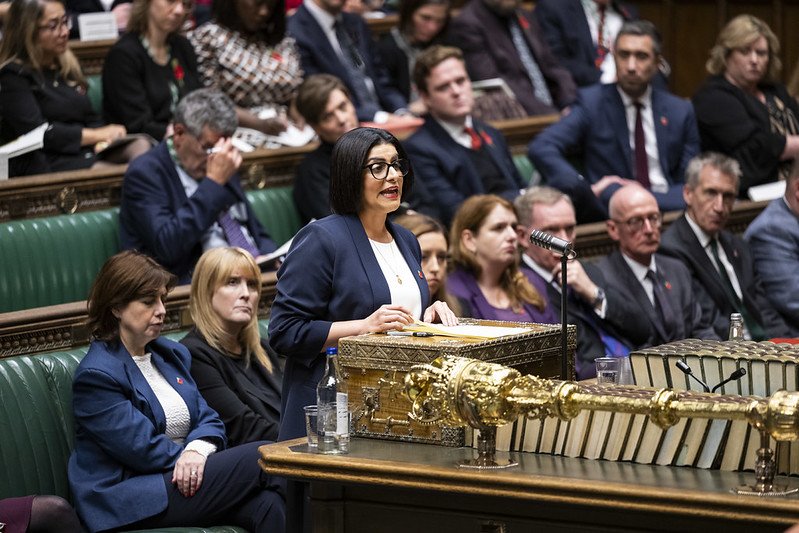
Immigration rules in the UK are set to change under plans from Shabana Mahmood, with the focus on the right of legal migrants to stay in the country. One report says many of them will have to wait longer to win that right.
The direction of the plans is towards a longer queue for settlement, and the consequences for those already in the system are likely to be considerable.
The long wait
Ministers like the word "earned" in this debate. It has a pleasing ring, suggesting a fair exchange of effort for reward. A wait is only fair if the people in it can see where it ends. Lengthen it, and the finish line turns from a date on the calendar into a rumour.
Until settlement is granted, migrants live with visa renewals, fees, paperwork and the quiet knowledge that one bad turn at work could unpick everything. Push that point further away and the provisional years multiply. Nobody in government is likely to call it a punishment, but it will function as one all the same.
There is also something faintly absurd about a system that asks people to prove they belong, then moves the proof. Employers, landlords, lenders and schools all make decisions on the assumption that dates mean what they say.
The people already here
The political line is that these changes concern the future, and who might arrive on what terms. Yet settlement rules bite hardest on those who have already arrived. Newcomers can read the small print before they come. Migrants who are already here, and have spent years building a life on the old terms, cannot rewind.
A change that applies only to future arrivals is a policy. A change that reaches people midway through their journey is closer to a revision of the bargain after one side has already kept its half.
The people most exposed are those who are partway through the route to settlement: workers who have changed jobs, moved cities and signed tenancies with a particular date in mind, and families whose children have started school on the expectation that their status would soon be secure. For them, a longer wait means more rounds of renewals and more points at which an application can fail or a fee can fall due. It also means more years in which a lost job, a late payment or an administrative error carries a heavy penalty.
Beyond the migrants themselves
The effects do not stop with those holding visas. Employers who have recruited from abroad, particularly in sectors that depend on overseas staff, may find that workers who once expected to stay for good now weigh up whether the uncertainty is worth it. Some will look elsewhere. Others will stay but with less confidence about committing to a mortgage, a business or a long-term plan.
Public services and local communities are part of the picture as well. Settled status brings stability, and stability tends to bring deeper roots, from steady school places to continued work in hospitals and care homes. A longer period of provisional status delays that, and it adds to the workload of a Home Office that must process the extra renewals along the way.
What happens next
The plans are still taking shape, and the detail will matter more than the headline. The key questions are how much longer the wait will be, which routes it will apply to, and whether people already in the system will be protected from the change or brought within it. Those answers will determine whether the new rules are felt as a modest adjustment or as a sharp break with what migrants were told when they came.
Any changes will need to be set out formally and will face scrutiny from MPs, from employers, and from those who work with migrants. Pressure is likely to centre on transitional arrangements, since the fairness of the whole scheme will be judged largely by how it treats people who began on the old terms. Until the rules are published, migrants in the queue are left to wait, and to hope that the end of that wait stays where they thought it was.
Photo: Unsplash